Pop-up & collapsible Christmas trees

Choose a folding tree range around the look you want to sell and the way customers will assemble, display and store it. Jingcan works with decorated, tinsel and snow-look designs for wholesale and private-label projects.

Start with a catalog style or a reference image. We can then discuss the tree body, support, lighting, decoration and packaging as one configuration, with sample requirements and order terms agreed for that project.

Explore the stylesDiscuss Your Range

JC501P red and green tinsel pop-up treeJC509P green and gold decorated pop-up treeJC510P pink and silver snowy pop-up tree

A product range built around your sales channel

A brand collection, an online listing and a wholesale assortment ask different things of the same folding tree. Tell us where the product will be sold so that the sample and packing review can focus on the right details.

Private-label collections

Build a coordinated look across foliage, ribbon, ornaments, light color and printed packaging. A reference palette and product image help establish the intended appearance before individual components are selected.

Online retail

Plan what the customer sees when opening the box: which parts are separate, how the tree opens and what the instructions explain. Match product photographs and the included-item list to the approved version.

Wholesale assortments

Separate styles, sizes and lighting versions clearly in the quotation and carton plan. Mixed-style requests can be reviewed, while order quantities and packing arrangements depend on the proposed configuration.

Explore the pop-up tree styles

Explore nine styles, from slim red-and-green tinsel trees to green-and-gold and snowy decorated designs. Pick a model as your starting point, then tell us your preferred height, colors and lighting so we can build a quotation around your range.

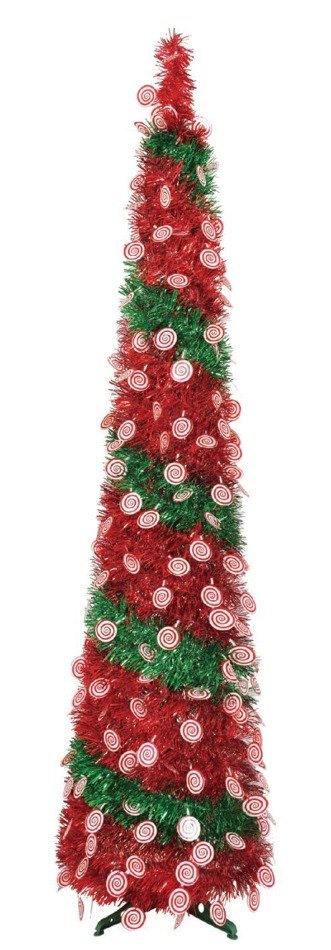
JC501P catalog appearance

JC501P · Tinsel

A slim red-and-green tinsel design with candy-style ornaments. Use it as a starting point for a colorful seasonal assortment; the material finish, decoration fixing and folded presentation need to be agreed for your version.
JC503P catalog appearance

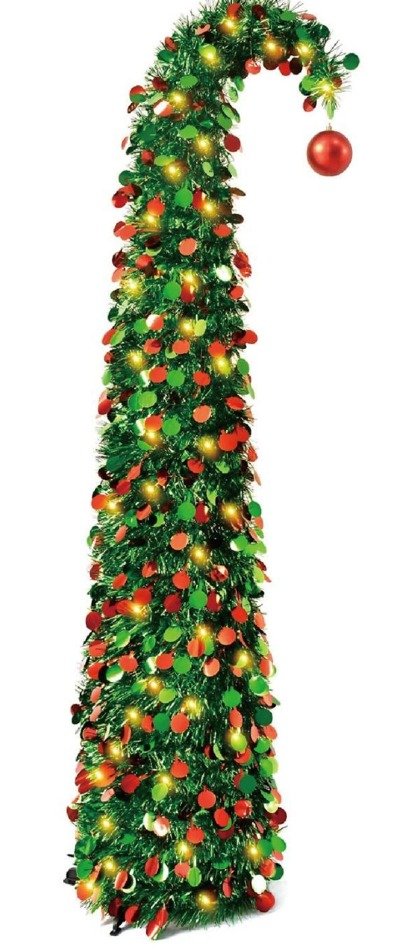
JC503P · Curved green

A curved green silhouette with colorful decoration. The curved top is part of the visual identity, so the support arrangement and packed position should be reviewed with the complete sample.

JC504P catalog appearance

JC504P · Curved tinsel

Red tinsel gives this curved-top style a distinct festive appearance. Compare the top shape, base connection and packing protection together rather than choosing only by the advertised tree height.
JC505P catalog appearance

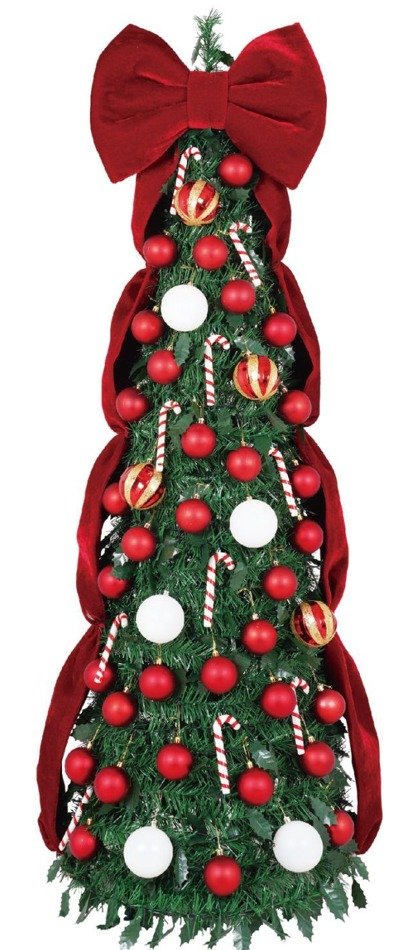
JC505P · Red bow

A green tree with a large red bow and red-and-white ornaments. Review bow proportions, ornament placement and the finished outline when selecting this look for a coordinated collection.
JC506P catalog appearance

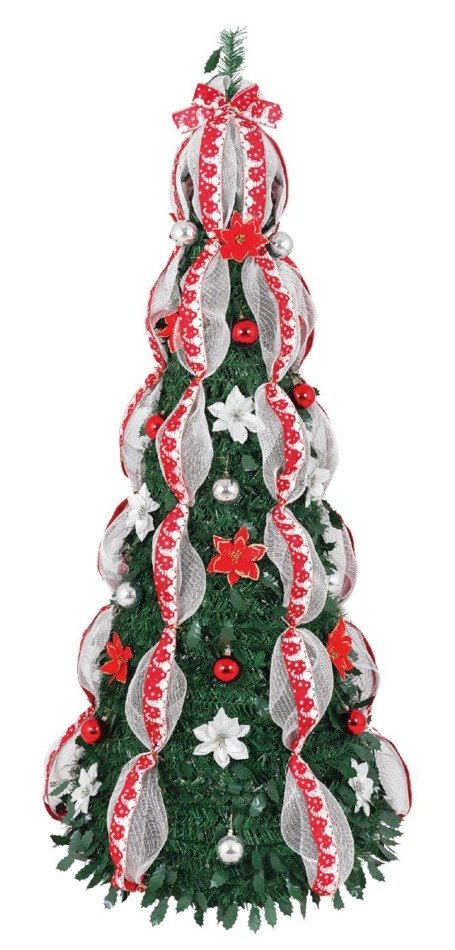
JC506P · Ribbon & ornaments

Ribbons and ornaments create vertical decoration lines on this green design. Their attachment and spacing matter both on display and when the tree is returned to its folded form.

JC507P catalog appearance

JC507P · Green with ribbon

A decorated green design with ribbon and a choice of lighting appearances. Select the look that suits your collection and include your preferred light color and control functions in the product brief.

JC508P catalog appearance

JC508P · Snow & gold

A snow-look design with gold decoration and a star-shaped topper. Discuss the snow finish and decoration protection with the folding action, especially where parts touch during packing.

JC509P catalog appearance

JC509P · Gold accents

Gold bows and ornaments stand out against green foliage. This design offers a different decoration balance from ribbon-led styles; use sample images to agree the final number and placement of accessories.

JC510P catalog appearance

JC510P · Snow & silver

A snow-look tree with silver-toned decoration. Compare the unlit appearance with the selected lighting effect, then review how the finish and ornaments recover after unpacking.

Discuss a Selected Style

Choose the surface and decoration together

Color and texture come from more than the tree shape. The foliage or tinsel surface, snow treatment and attached decoration all affect the finished appearance and the space needed when the tree is folded.

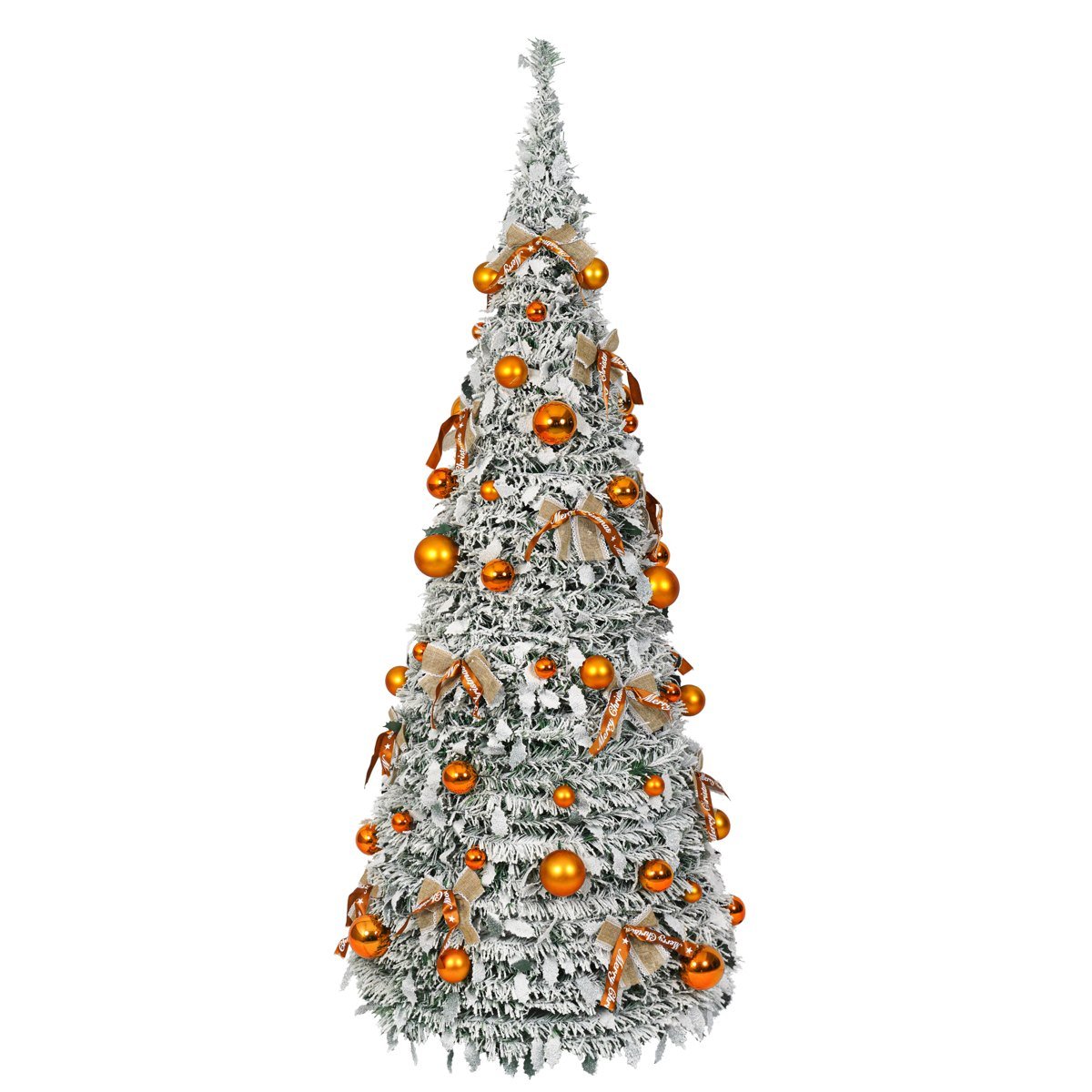
Tinsel appearance on JC501P

Tinsel and reflective surfaces

Tinsel adds reflective color and a festive look to retail displays and themed collections. Choose the color combination, strip finish and fullness together; the sample lets you compare shine and coverage under your display lighting.

Snow-look surface with ornaments and ribbon

Foliage, snow finish and ornaments

A green or snow-look body can be paired with ribbon, bows and ball ornaments. Review the spacing and attachment of decorations as well as the visual balance. A change in snow treatment or accessory size may change packing contact points and needs a new sample check.
Define the model before comparing quotations

SpecificationWhat to specifyHow it is used
Size & silhouetteDisplay height, widest diameter and top shape.Compare models at the same intended display size.
Tree body & supportBody construction, support pieces and fixing method.Keep the complete assembly matched to the sample.
Finish & decorationColor, snow appearance, accessory type, count and location.Distinguish visually similar product versions.
LightingLight color, function, power supply and controls.Review the lighting system with the folding structure.
Storage & packingActual folded size, carton dimensions and included parts.Use measured sample data for packing and freight planning.
Order planQuantity by style, target market and required delivery window.Confirm minimums and production arrangements for the project.

Use display height and diameter to plan shelf or floor space. Use the packed carton dimensions, gross weight and units per carton to compare storage and freight costs. Include both sets of requirements in your inquiry.

Keep the brand presentation consistent

A coordinated collection

Carry a consistent palette across your collection through ribbons, bows, ornament finishes and light color. Adjust the size and placement of decorations to suit each tree silhouette while keeping the range visually coordinated.

A clear product promise

Make photographs, instructions and the included-item list describe the version customers receive. If a topper, stand, power unit or accessory is separate, show that clearly in the final packing and assembly information.

Understand the six structural decisions

Expanded pop-up tree
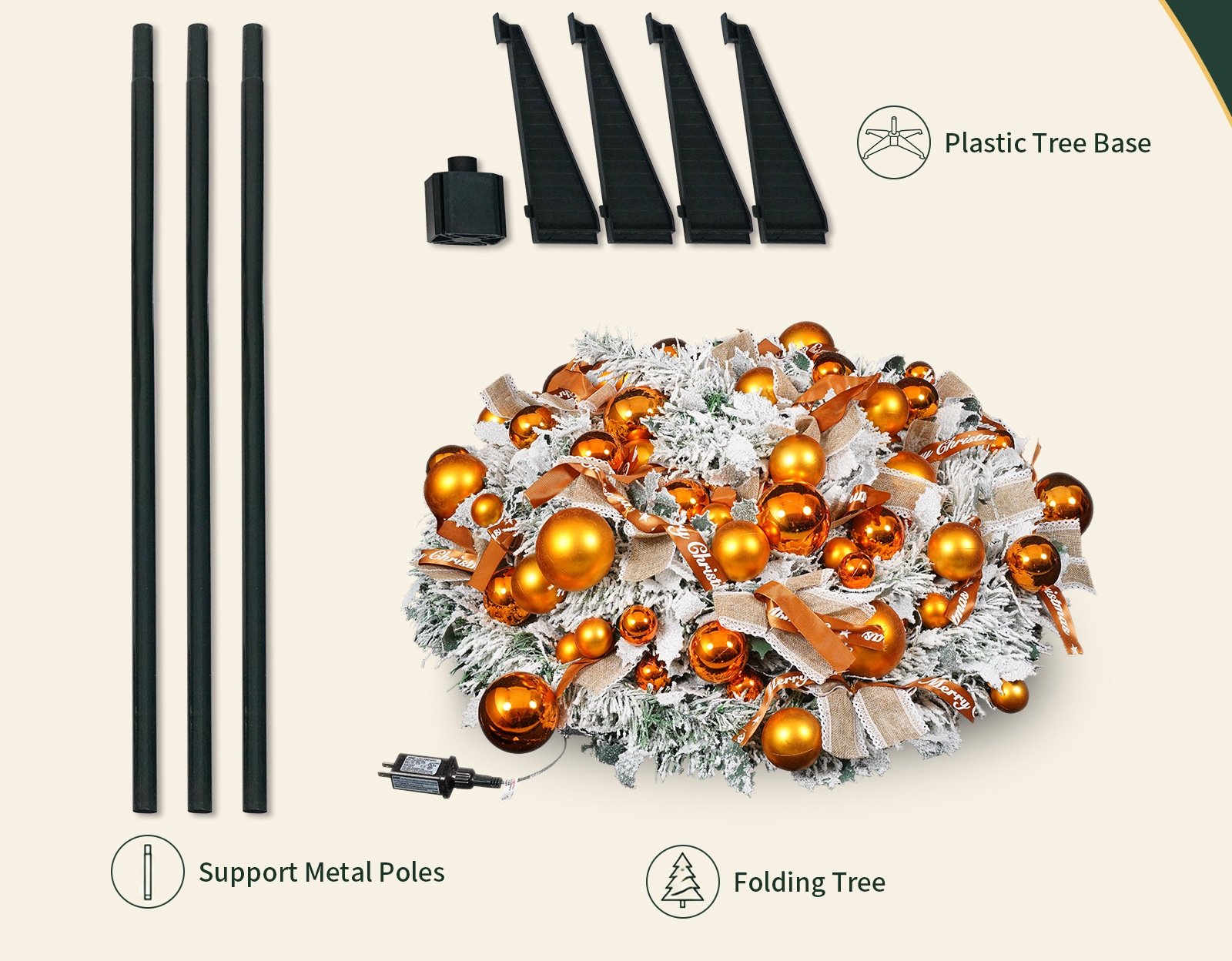
Existing product composite showing collapsed body and parts

Tree body

In the demonstrated design, the decorated body lifts over a central support and opens into its tree shape. Compare the open silhouette and the collapsed footprint when choosing a model for your range.

Support & base

The base and connected pole sections support the displayed tree. Check that your team can identify and assemble these pieces easily, especially for retail kits and displays installed by store staff.

Fixing points

Show which connection or retaining point secures the tree in the display position. Changes to the support or fixing method require renewed assembly and stability review.

Decoration clearance

Allow space for bows, balls and other attached parts as the body folds down. Review contact and pressure points before deciding how compactly the product can be packed.

Light-wire routing

For a lit model, review the cable route, connections and placement of the power or control unit during both opening and packing. The system must follow the agreed configuration.

Folded form

Compare the collapsed tree body, separate accessories and complete packed carton. This shows the storage space each unit needs and gives you the information to plan individual delivery or bulk shipping.

Private-label details beyond the tree

Branding is usually carried by the customer-facing information and packaging as well as the decoration palette. Plan these items against the approved product version before artwork is finalized.

AI-created concept of hangtags, printed-material blanks and ribbons

Hangtags & product cards

Add your logo, model name and product message to the hangtag or product card. Plan the attachment position alongside the decoration so the branding is easy to read when the tree is displayed.

Assembly instructions

Use illustrations that match the support pieces and setup sequence. Include the accessory list and the steps needed to fold and repack the product, using the chosen model as the reference.

Barcode & carton artwork

Keep each style, size and lighting variant tied to its own agreed label information. Review carton marks and customer-supplied warehouse instructions before printing and packing.

Develop the sample around the complete product

1. Define the starting model

Send a catalog reference or your own image, approximate dimensions, quantity and target market. Separate appearance changes from mechanism changes so the feasibility review can focus on what is actually new.

2. Review appearance and handling

Review the proposed sample as an assembled product and as a packed set. For a lit tree, include the intended light function. Use photos or a model-specific demonstration to discuss assembly, decoration clearance and storage.

3. Record the agreed version

Approve the tree body, support, decorations, lights and packaging together. Record the agreed photos, specifications and artwork as the production reference so repeat orders can follow the same version.

Sample cost and timing are agreed for the proposed work. A new folding mechanism needs a different review from an appearance change on an existing design.

Discuss a Sample Plan

Compare three design directions

DirectionVisual focusSample review
Tinsel stylesReflective color and a distinctive silhouette.Surface finish, shape retention and protection of the curved top where present.
Decorated green stylesThe relationship between foliage, ribbon, bows and ornaments.Accessory positions, attachment, folding clearance and the chosen lighting version.
Snow-look stylesA snow effect combined with a gold, silver or other agreed palette.The actual finish, contact points, decoration protection and unpacked appearance.

For a useful price comparison, keep tree height, decoration quantity, lighting and order volume consistent. Then compare the visual effect and packing needs of each design direction.

What changes a pop-up tree quotation

Cost factorWhat changesUseful input
Size & constructionBody size, support design and a new mechanism can change material use and sample work.Height, width and a reference model or structure video.
Foliage & finishCoverage, surface treatment and snow appearance affect the work and packing review.Desired appearance and close-up references.
Lights & accessoriesLight specification, control, ornament type and attachment add different components and assembly work.Lighting functions and a decoration list or image.
Packing & quantityRetail artwork, separate accessory packing and the quantity split affect preparation and handling.Quantity by version, channel guide and destination.

Compare quotations using the same product version and delivery terms. A lower unit price may describe a different light set, decoration package or packing method.

Review the complete opening and storage sequence

Watch the tree take shape

Follow a real decorated pop-up tree from support assembly to the finished, lit display. The demonstration shows how the separate support and folded tree body come together.

  • Assemble the base and connect the support pole.
  • Lift the tree body onto the support and position the top.
  • Adjust the decorations, connect power and review the light settings.

Use the instructions supplied with your selected model. Fold-down and repacking are separate sample-review steps below.

Assembly & lighting demonstration · 1 min 05 sec · on-screen English instructions

Use your sample to walk through the customer experience: identify the parts, assemble the tree, check the finished display, then fold and repack it. The three steps below help your team review both presentation and handling.

Unpack & identify

Lay out the tree body, support pieces and accessories against the proposed parts list. Check how decorative parts and electrical components are protected and whether the first assembly steps are clear.

Open & assemble

Follow the model’s support and fixing sequence. Review the displayed outline, connection fit and decoration positions. Where lighting is included, check the specified function using its matched power components.

Fold & repack

Fold the body down and return it to its carton with the separate support parts. Check that ribbons and wires are tidy and ornaments have room. Reopen the sample to see how the display appearance recovers after storage.

Quality checkpoints for the selected configuration

Set the inspection checklist around the approved sample: appearance, assembly, decoration fixing, lighting, finished dimensions and packing. Agree acceptance criteria and inspection quantities before production so your team has a clear basis for approving the goods.

Materials & appearance

Compare foliage or tinsel, color and finish with the agreed reference. Distinguish normal appearance choices from a changed material or treatment.

Support & assembly

Review section fit, base matching, fixing points and the assembled form. Agree any stability test method and acceptance criteria for the product.

Decoration fixing

Check the agreed accessory type, count, position and attachment. Look at the parts most likely to touch when the body is folded.

Lighting function

For lit models, compare the light color, controls, connections and supplied power components with the approved version.

Finished presentation

Review the full outline, height and width using the agreed measurement method, together with the unpacked appearance.

Packing & identification

Check parts, instructions, protection, model labels and carton quantities against the order. Keep lighting and decoration variants identifiable.

Carry the sample decisions into bulk production

Before production

Tie the approved sample to the component specification, decoration plan, artwork and packing version. A requested change in height, support or lighting should be reviewed for its effect on the whole product, not only the changed part.

During production

Use the agreed reference to review early production pieces and the relevant process checks. When several styles are produced together, keep accessory and lighting differences tied to their own model records.

Before dispatch

Align the finished product, included parts, printed information and carton plan. Production completion, inspection, packing and actual dispatch are separate milestones when discussing delivery timing.

Pack for the product and the delivery route

Collapsed snow-flocked Christmas tree with gold ornaments, individual carton and bagged support parts

Tree body

Establish the folded position from the actual sample. Protect the top shape and snow or surface finish where they contact other parts.

Separate parts

Plan where poles, base sections and loose accessories sit so that they can be found without pressing against ornaments or the tree body.

Lights & decoration

Review cable routing and accessory contact points in the closed pack. The packed arrangement should be part of the sample approval.

Printed information

Match instructions, barcode details and carton artwork to the correct product version. Check artwork before printing rather than after the goods are packed.

Measured carton data

Compare the individual carton and master carton dimensions, gross weights and packing quantities. These figures let your freight provider calculate shipping costs for the intended route and order volume.

Channel instructions

Share retailer, carrier or warehouse packing instructions early. Any required packaging test, label format or delivery arrangement should be agreed for that order.
Discuss Packing Requirements

Match the display to the space

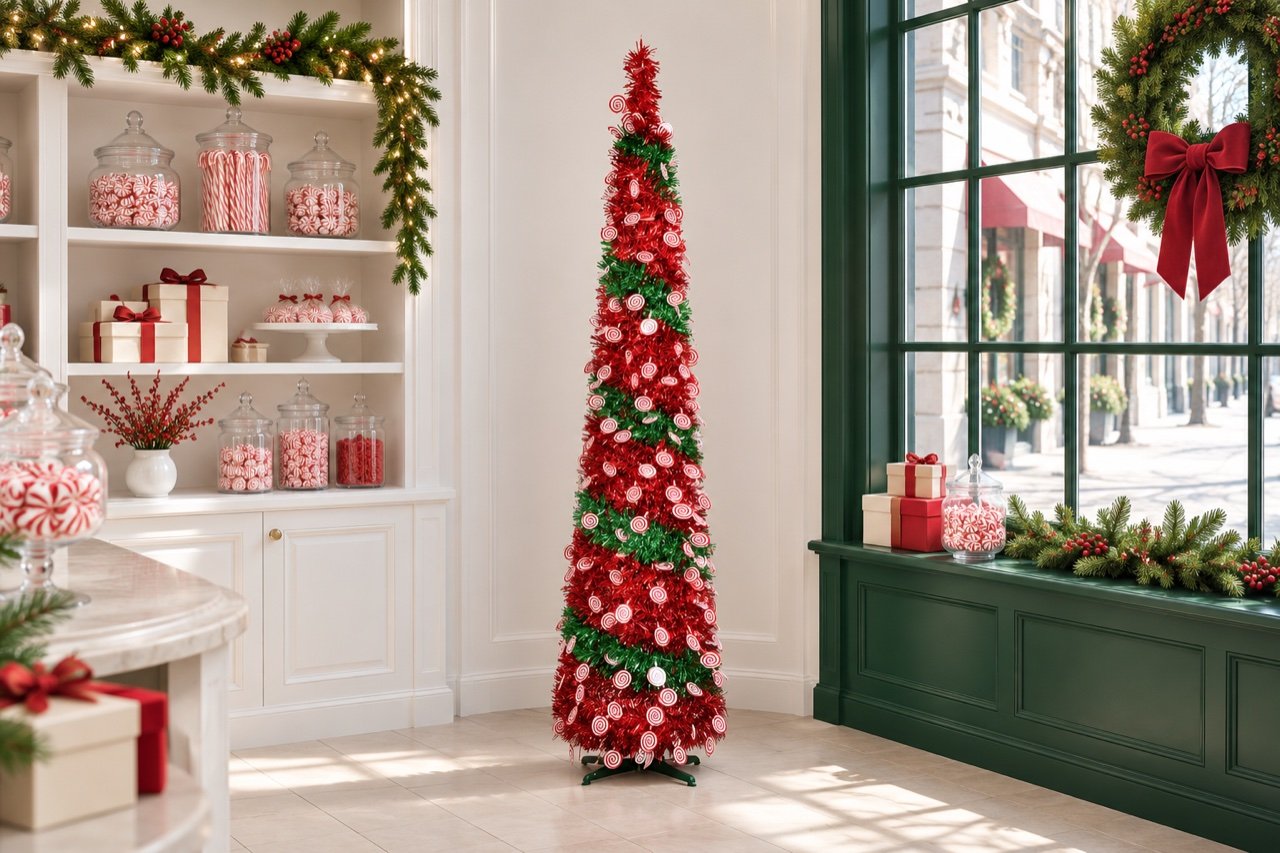
AI-created JC501P red-and-green tinsel tree in a festive retail setting

JC501P · Red & green tinsel

Seasonal retail displays

Consider the width at the widest point, the viewing direction and access around the tree. A narrow silhouette can create a different presentation from a fuller decorated body even at the same height.
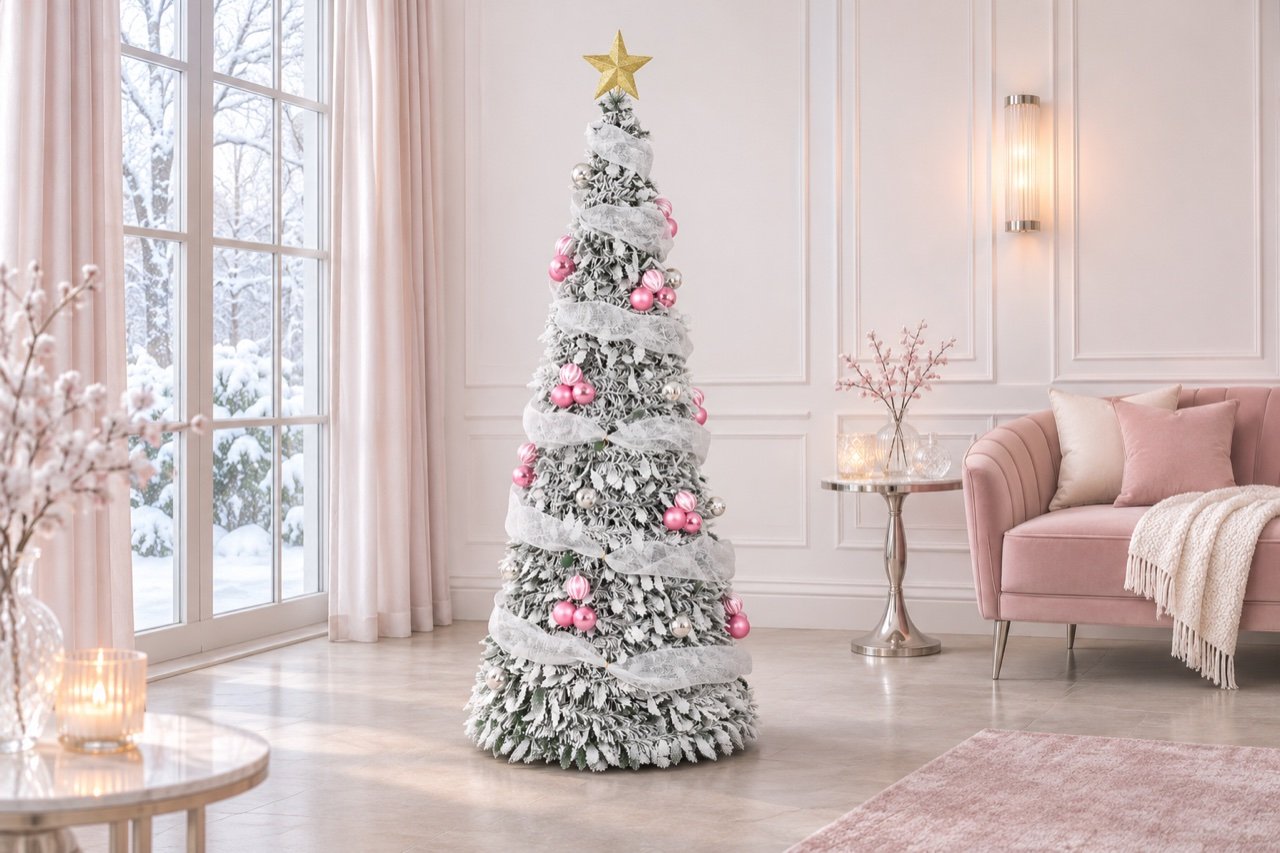
AI-created JC510P pink-and-silver snowy tree in a soft winter event setting

JC510P · Pink & silver snow

Indoor event settings

Discuss the available setup space, power location for a lit model and who will assemble and store the display. Use the actual instructions and product dimensions when planning the installation.
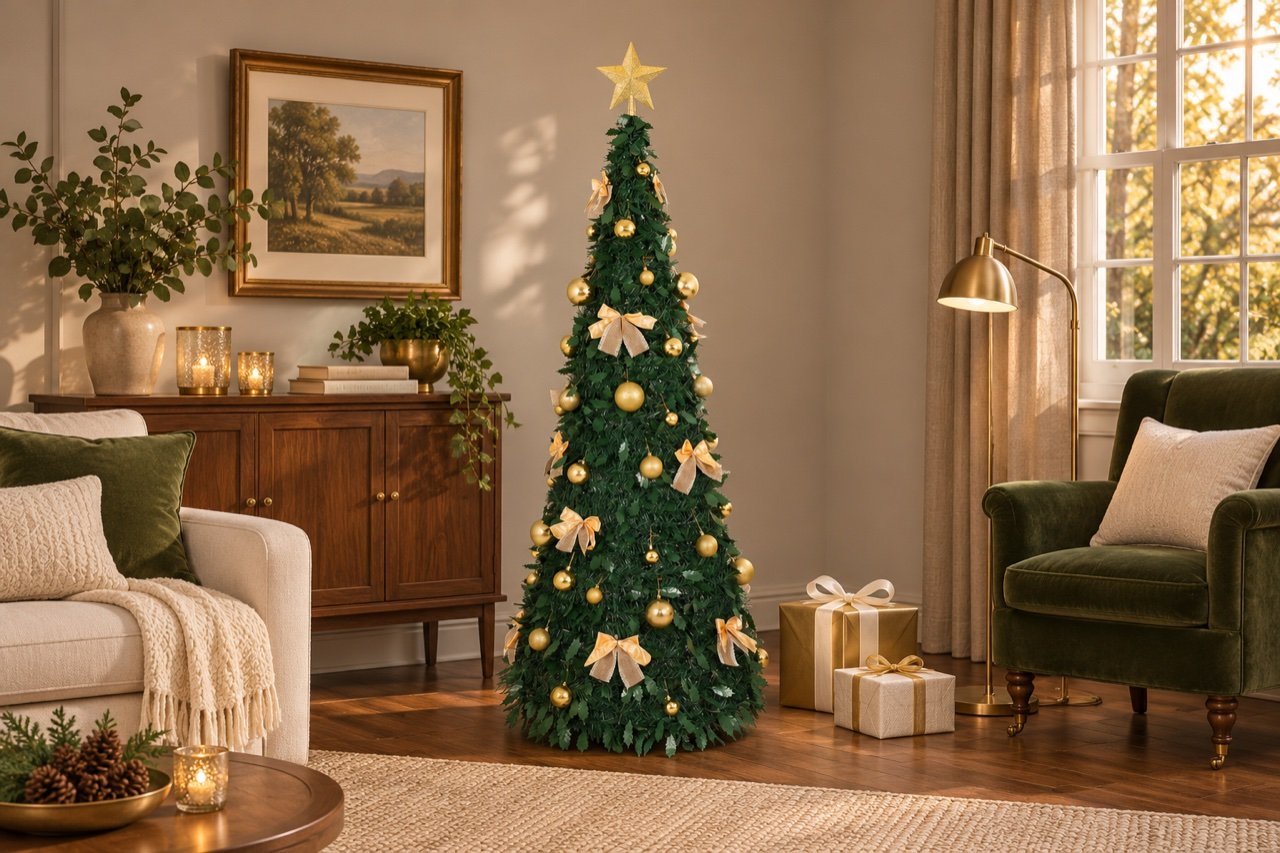
AI-created JC509P green-and-gold decorated tree in a warm classic living room

JC509P · Green & gold

Home-decoration assortments

Pair the decoration palette with a practical storage format for the home. Review the collapsed footprint, included parts and unpacking sequence so your retail listing can explain both the festive look and how the tree is stored.
A catalog example: start with a clear model

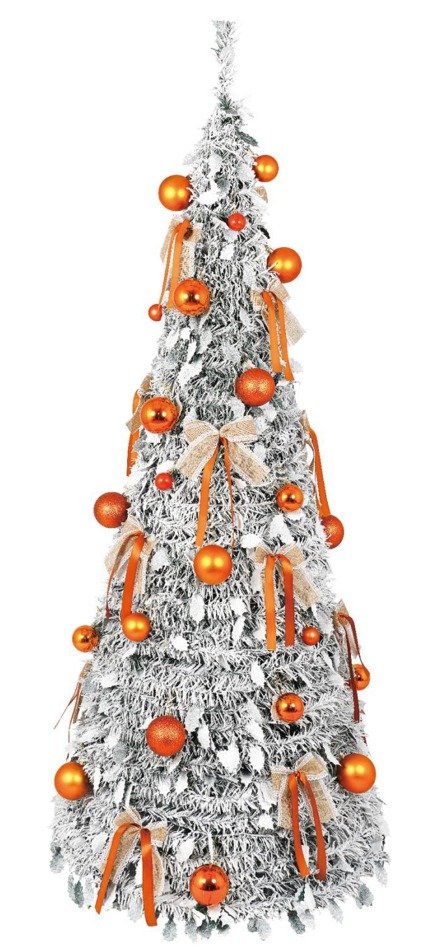
JC502P snow-look decorated catalog model

JC502P: snow-look with gold decoration

JC502P is listed in the catalog at 6 ft high and 60 cm wide, with snow-look foliage, gold ornaments and ribbon. Choose it as a starting point for a coordinated gold-and-white collection, then specify the colors, lighting or packaging you would like to develop.

A useful next brief would identify what should stay the same and what should change: silhouette, decoration palette, lighting, support or packing. The proposed changes can then be reviewed against the actual sample.
From product selection to a factory discussion

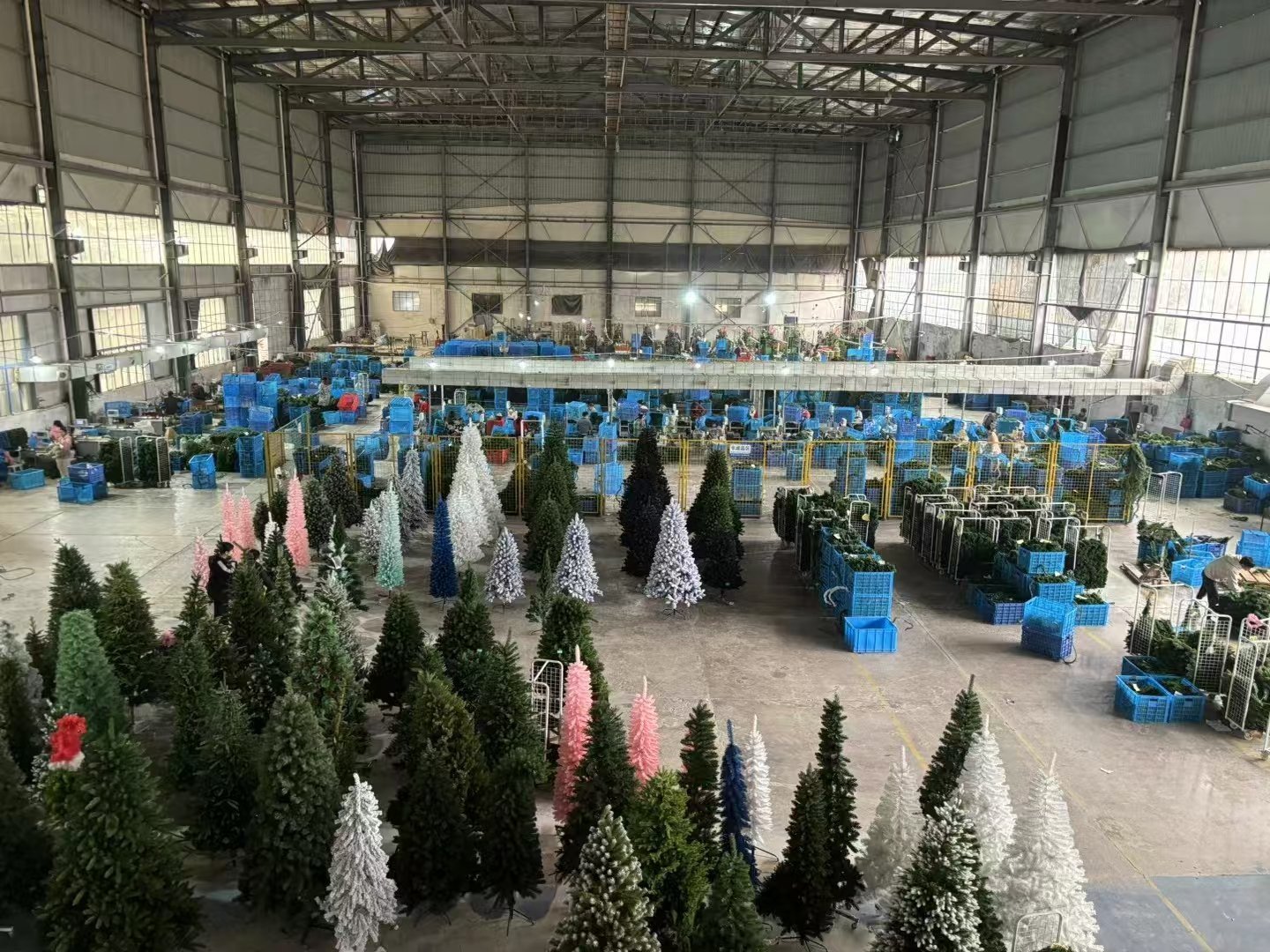
Existing Jingcan workshop photograph

Manufacturing and project coordination

With manufacturing roots dating to 2006 and two owned production factories, Jingcan supports wholesale and custom Christmas tree projects. Bring your preferred style, target market and order plan so we can work through the product configuration, sample and production requirements with you.

Start from an existing model or a development reference. We can discuss the sample review and the information needed for production. For repeat orders or new seasonal colors, identify the previous approved version and the requested changes clearly.

Discuss the Product Brief

Questions before starting your project

What is the minimum order quantity?

Our general starting quantities are 100 trees for simpler workmanship and 500 for more complex designs. Send the model, colors, lighting and quantity per style, and we can confirm the MOQ and quote for your selection. If you are building an assortment, include the quantity split so we can review the styles together.

How is a pop-up tree assembled?

The demonstrated model comes with ornaments and ribbons already attached to the tree body. Assemble the base and support pole, lift the folded body over the pole, secure the top, then arrange the decorations and connect power. The assembly video on this page shows the sequence, so your team can assess the setup before selecting a sample.

Can you develop a tree from our reference?

Yes. We can use your reference image or sample to develop the appearance, including colors, foliage finish, ribbons, ornaments and lighting. Send the target height, display width, market and order quantity. We then work through the proposed configuration and sample with you; for a different folding mechanism, include a movement video or physical sample so the structure can be assessed at the start.

How do we choose the lighting?

Start with the light color and effect your collection needs, such as warm white or multicolor, then tell us the destination market and any switching or control requirements. We select the light set, power supply and wire arrangement around the tree size and folding structure. Review the lit sample alongside the unlit tree to confirm both appearances before bulk production.

How should we plan sampling and bulk production?

Bulk production generally takes 30–45 days. Plan the sample review and shipping time separately when working back from your required arrival date. Send the selected style, requested changes, order quantity and launch schedule; we will confirm the sample completion date and production plan for that brief. Approve the appearance, lighting and packing together before the sample becomes the bulk-production reference.

Can packaging and instructions carry our brand?

Yes. Private-label options include branded cartons, hangtags, product cards, assembly instructions and barcode labels. Send your logo or artwork, selling language and retailer or warehouse requirements. We can then match the printed materials to your chosen tree, parts list and packing plan for artwork approval.

What documents can you provide for our market?

We can work with your purchasing or compliance team to review the product specifications and relevant available test reports and certificates. Send the destination market, selected tree and lighting version, and your document checklist. We will identify the documents that cover the proposed configuration and any additional testing needed before you finalize the order.

How are the trees packed, and how do we estimate freight?

The existing BW-ZDS-WW-6FT is packed one tree per individual carton, with three individual cartons in one master carton. For your quotation, provide the quantity, destination and preferred delivery terms. Use individual and master carton dimensions, gross weights and carton counts to compare delivery options; your retailer or warehouse labeling instructions can be included in the packing brief.

Let’s develop your pop-up tree range

Send a catalog model or reference image, approximate size, quantity and target market. If you already know the decoration palette, light functions, packing requirements or target delivery window, include those details too. A partial brief is enough to start the discussion.

Useful files include structure videos, reference-sample photographs, brand artwork and customer packing instructions. We can then discuss the configuration and the sample review needed before confirming production.

Discuss Your Pop-Up Tree
Scroll to Top