Christmas tree production lead time

Plan your next Christmas season around the date your trees need to reach your warehouse. Bring sample approval, material preparation, production and shipping into one schedule, with enough room for the choices that are still being made.

Typical bulk production: 30–45 days

Timing depends on materials, order quantity, configuration and the factory schedule. Sampling and international delivery need their own time allowances.

Discuss your production timeline
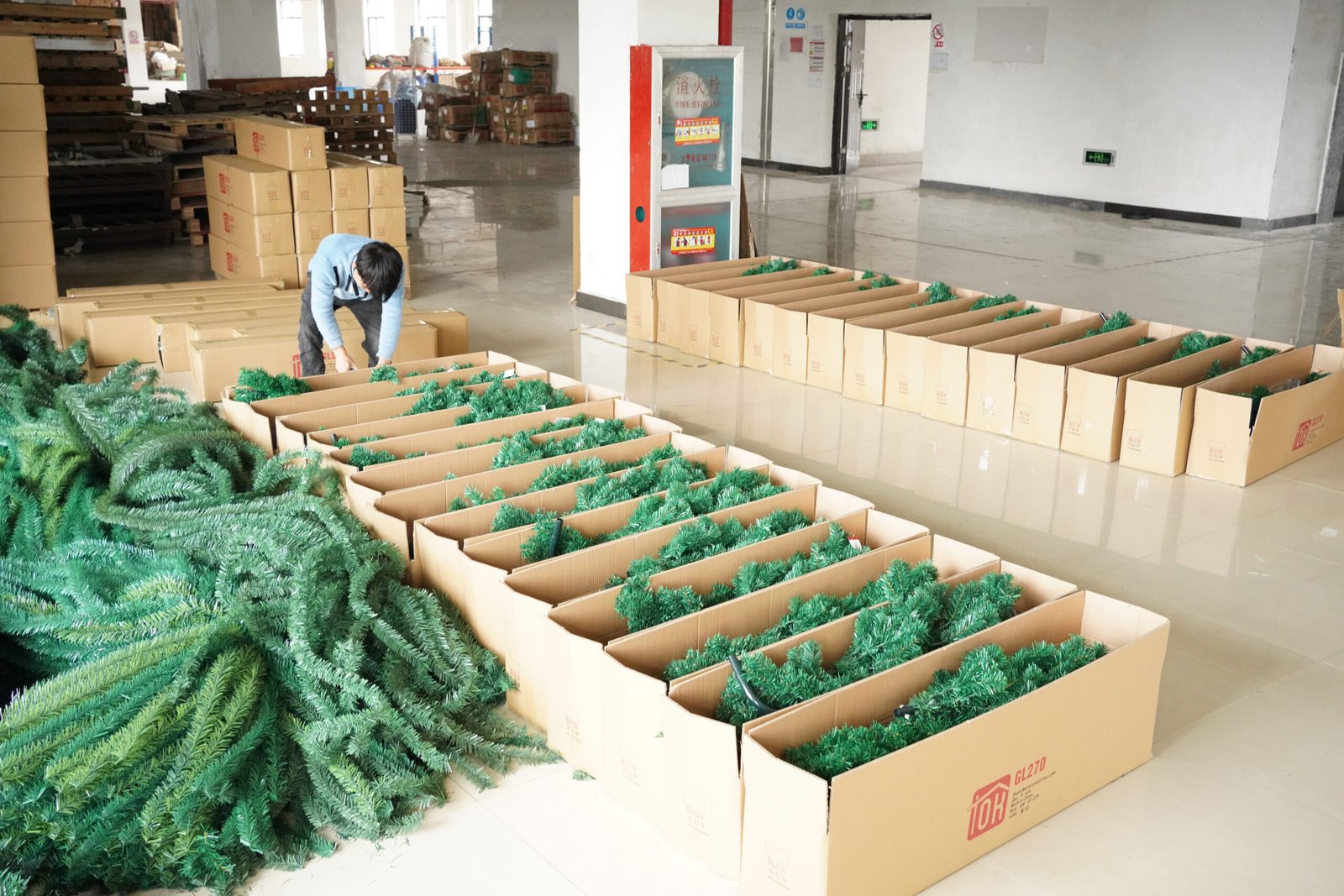
Worker packing artificial Christmas tree sections into cartons at Jingcan

Work back from your warehouse date

Start with your required arrival point. Each earlier milestone depends on the information below, so the plan reflects your destination and order.

Milestone, working backwardsWhat it coversInformation needed / source
Warehouse receiptThe date stock needs to be received at your warehouse. An on-shelf deadline may need extra handling time.Buyer: destination, receiving date and any retail preparation time.
Arrival at destination portThe arrival point before import clearance and inland delivery.Buyer or forwarder: clearance, inland transport and receiving allowances.
Loading and factory departureThe planned dispatch date, matched to a shipping booking.Forwarder: route, sailing schedule and transit estimate. Jingcan: cargo readiness and loading arrangements.
Inspection and packingTime for agreed checks, any corrections, packing and dispatch preparation.Buyer and Jingcan: inspection arrangements, release requirements and approved packaging.
Production completionThe expected finish of the agreed bulk order, before the remaining release and dispatch steps.Jingcan: quantities by style, configuration, material availability and the production schedule.
Material readinessPreparation of foliage, structure, lighting components and packaging for the approved order.Jingcan: component availability and procurement timing; buyer: final artwork or special requirements.
Sample and specification approvalThe agreed product version used for production planning.Buyer and Jingcan: sample status, required revisions and approval timing. New development needs its own sampling allowance.

A factory departure date and an overseas arrival date are separate milestones. Shipping estimates come from the route and booking; the order schedule is agreed after the relevant inputs are available.

Allow for the work before production

The starting point matters as much as the order size. A new tree design and an unchanged repeat order need different preparation.

A new design

Allow time to settle the tree shape, foliage and lighting before bulk production. A new structure, unfamiliar light function or revised packaging may need another sample or approval round. Share the target look and any non-negotiable requirements early, so sample development and material planning can be assessed together. The sampling window is set for the project.

A repeat order

Start with the previous approved sample and the changes for this season. The same appearance can still involve a different light set, power supply or carton. An unchanged specification may reduce development work, but material availability, quantities by style and the factory schedule still determine the production plan. Flag any changes before using last season’s dates as a guide.

Planning for the busy season

June to September is Jingcan’s peak production period. Share your next-season requirements early, especially while samples or components are still being decided. The right order window depends on your destination and project readiness.

Bring us your target date

Send the details you already have. Jingcan can review the production side of your plan, while transport estimates come from your buyer or forwarder. If the schedule is tight, include the latest acceptable warehouse date so the remaining options can be discussed against the actual order.

Discuss your production timeline
Scroll to Top