Christmas Tree Sampling and Prototype Approval

Explore the look, assembly and lighting of your next Christmas tree before agreeing a bulk specification. Jingcan helps turn your reference style into a focused sample project, with the review scope, fees and next steps agreed around the product you want to develop.

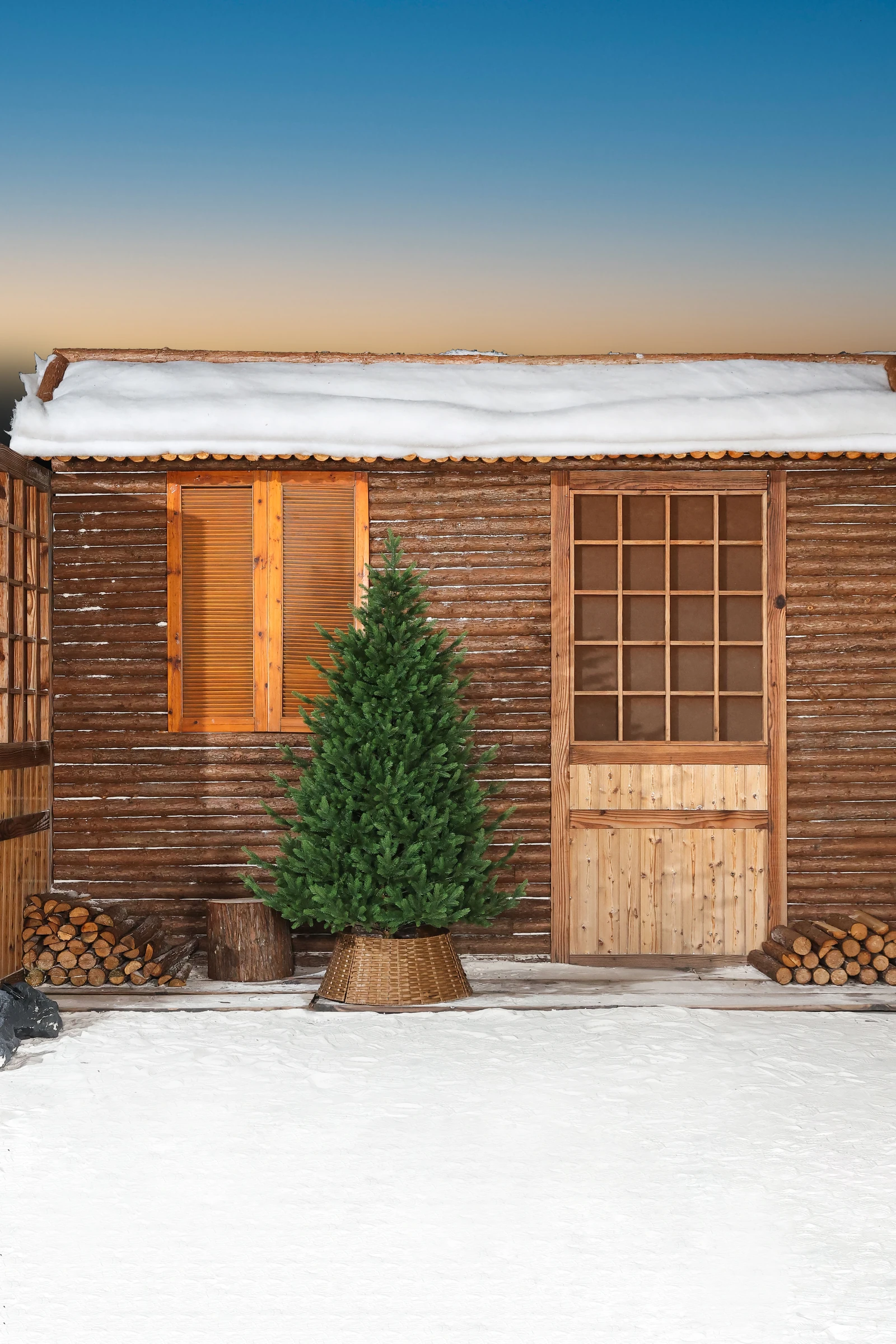
Unlit artificial Christmas tree displayed with a woven base cover

Choose the Sample Stage That Fits Your Next Decision

Start with the question your sample needs to answer. An existing style may need fewer stages than a new design.

Sample stageReview goalStarting inputUseful output
Initial sampleExplore appearance, size, assembly and basic functions.Reference style, target dimensions and the features to evaluate.Physical sample with a matching specification and review photos.
Revised sampleResolve specific differences found in the first review.Marked photos, desired changes and the previous sample reference.Updated sample and a clear record of what changed.
Final approval sampleAgree the appearance and configuration to carry forward.Accepted changes, final specifications and the sample version.Written approval linked to the selected sample and documents.
Pre-production or first articleCompare production materials and assembly with the approved basis.Approved sample, order specifications and production materials.Comparison findings for the agreed production release process.

The stages describe different review purposes, rather than a mandatory sequence for every order.

See the Details Behind the Finished Sample

Review the complete tree alongside its close-ups and components. Each view should help answer a specific question about the same sample.

Shape, foliage and finish

Start with the assembled and shaped tree. View it from the front and another angle to judge the outline, branch spacing and overall fullness. Record the height and base width using the agreed measuring method, including whether the stand is part of the height.

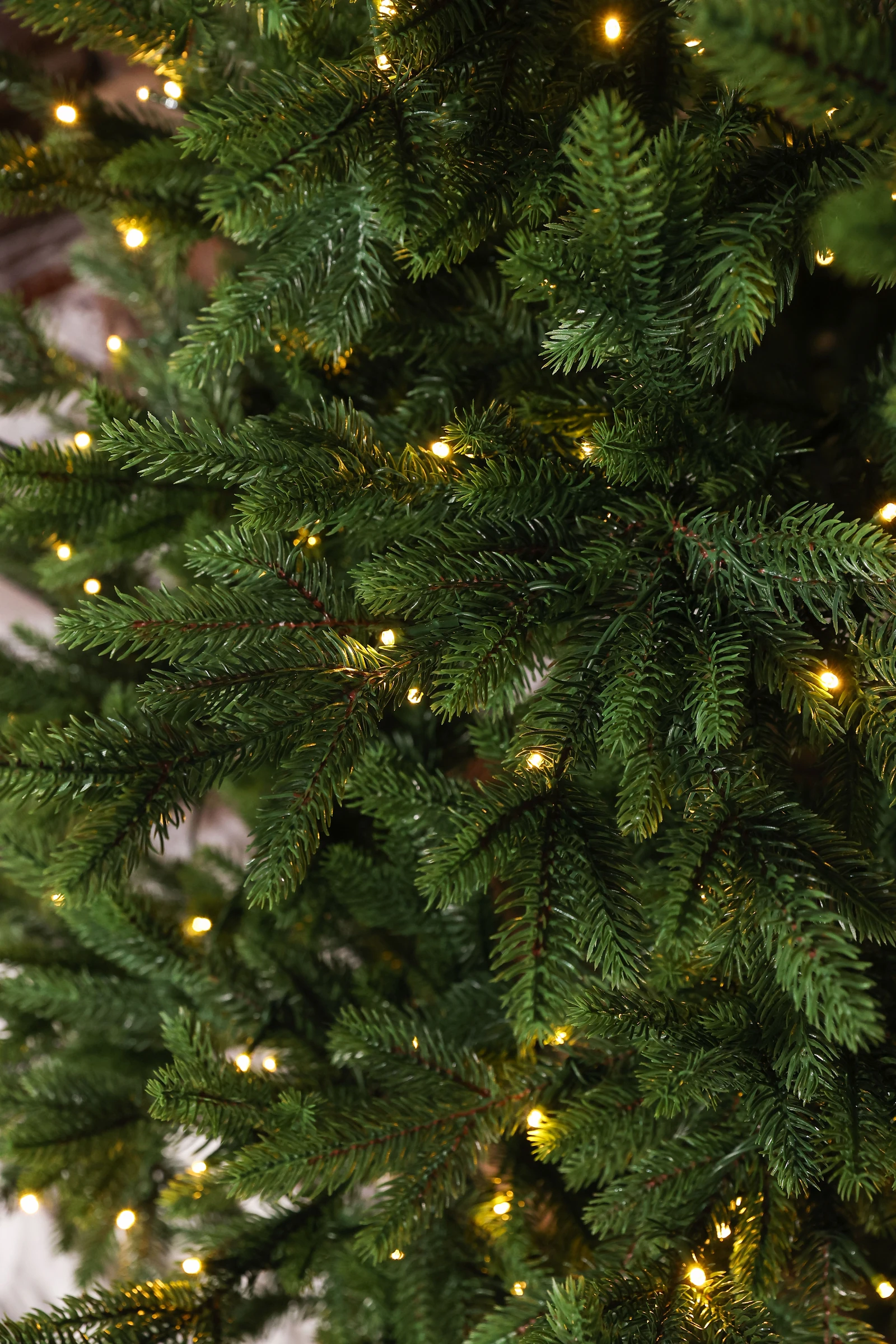
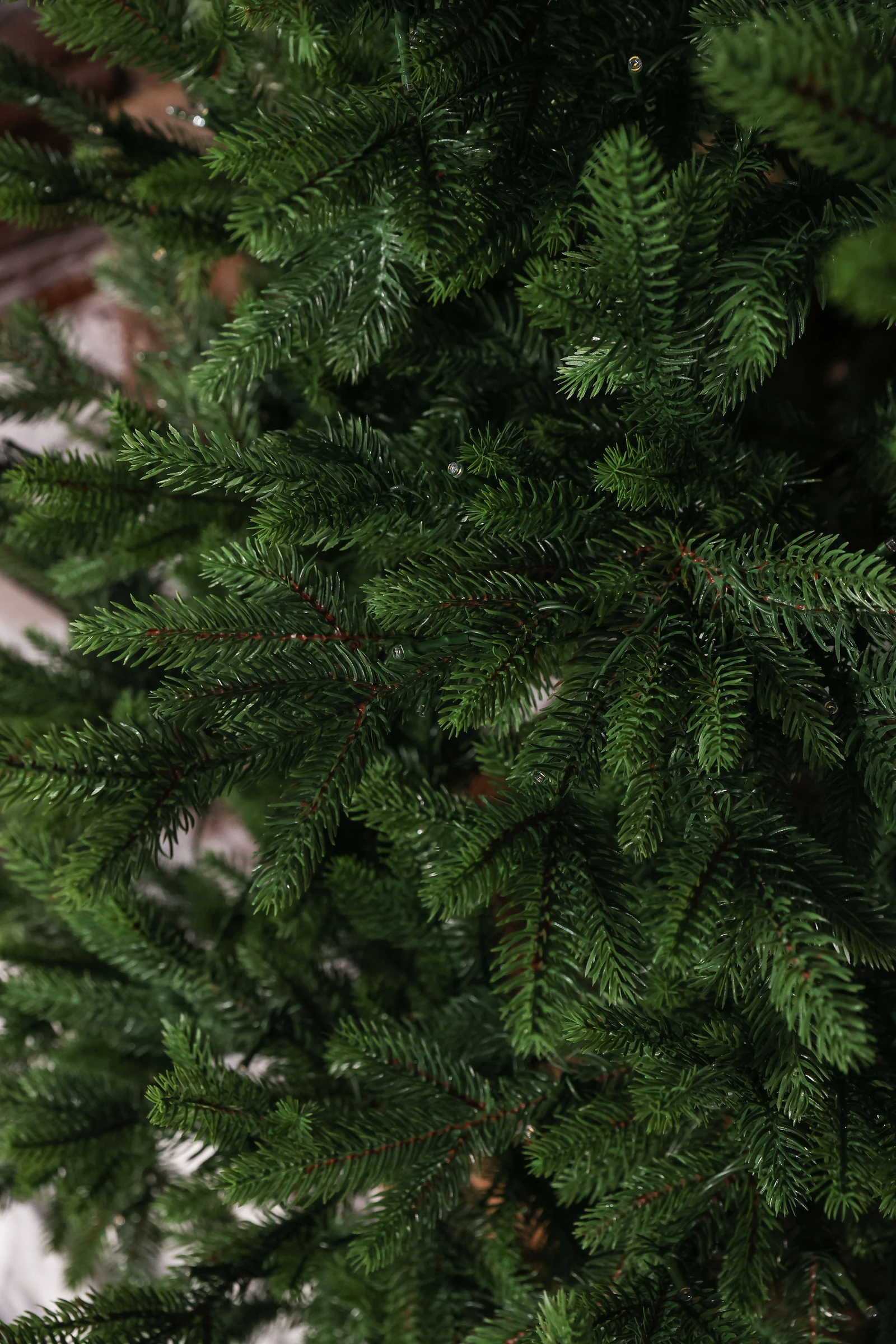
Then move closer. Look at needle shape, colour, exposed branch tips and the transition between outer and inner foliage. For a snow-finish or decorated sample, add close-ups of the finish and attachment points. Compare colours under similar lighting; a cropped photograph alone cannot show the entire tree.

Illuminated foliage close-up showing needles, branch tips and warm lightsLights on
Unlit foliage close-up showing needle shape, branch tips and light bulbsLights off

Assembly, lights and packout

Assemble the sample with its matching stand and supplied parts. Check the section connections and the instructions needed for setup. On a pre-lit version, review the agreed light colour and functions with the specified controller and power supply, rather than judging the effect from one still photograph.

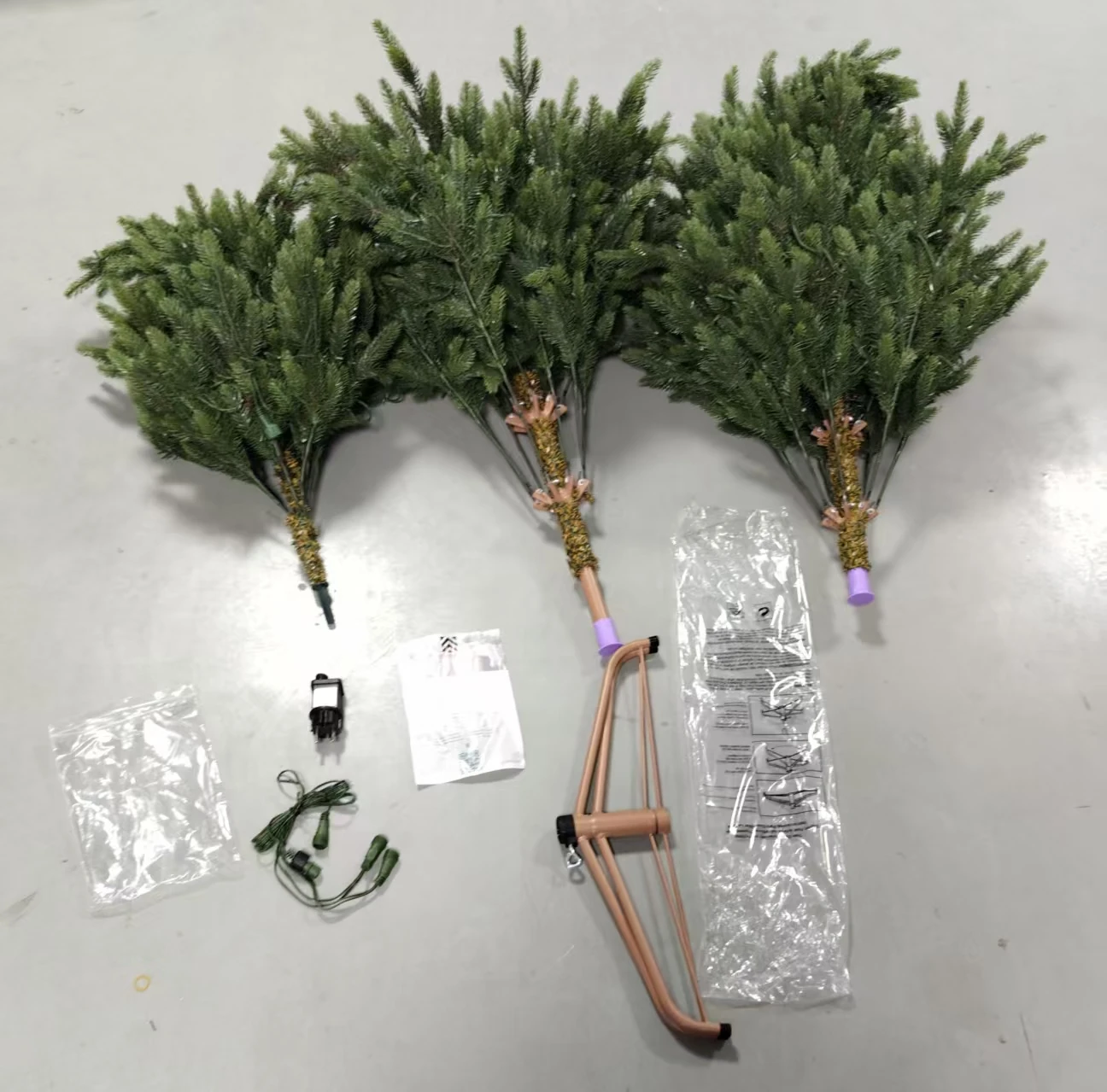
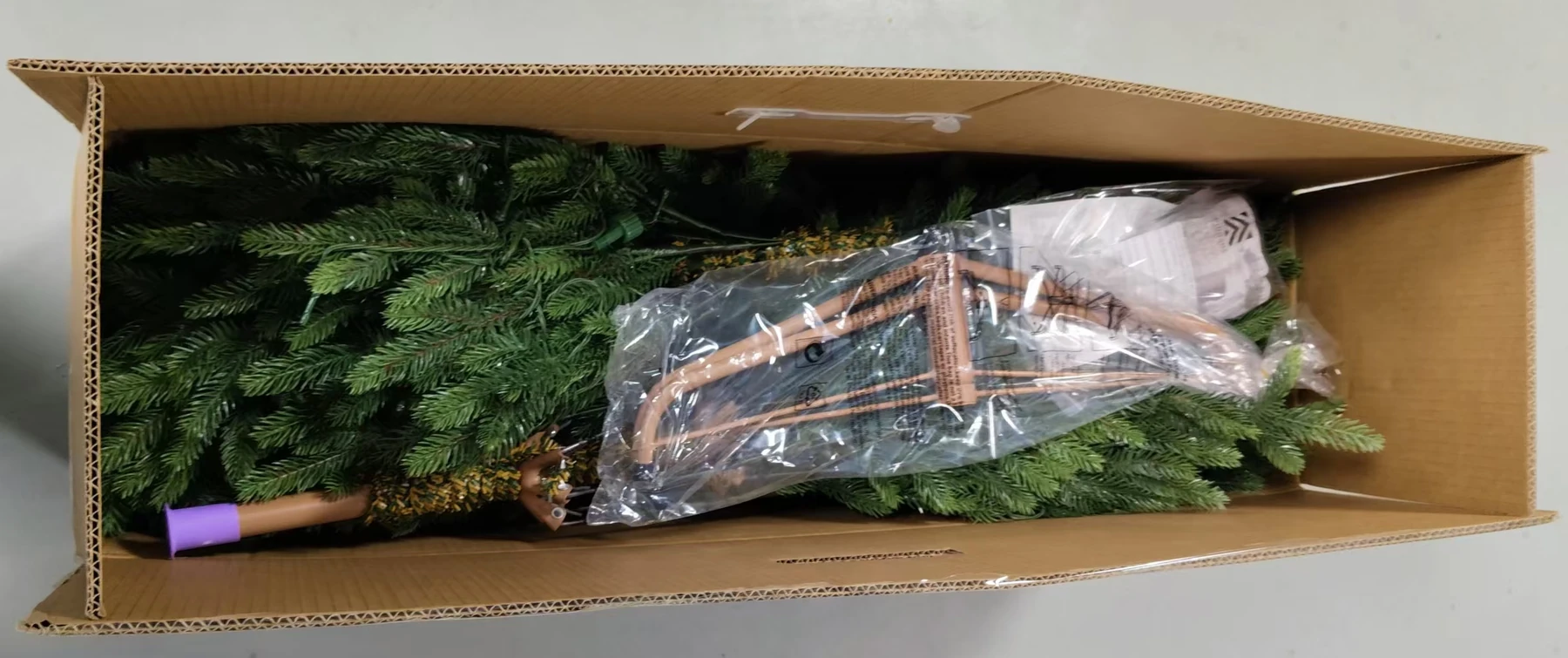
Lay out the accessories and compare them with the packing list. If packaging is part of the sample scope, review how the tree, stand and components fit in the carton and how the tree looks after unpacking. Any electrical, stability or transport testing should have its own agreed scope; visual sample approval does not replace those checks.

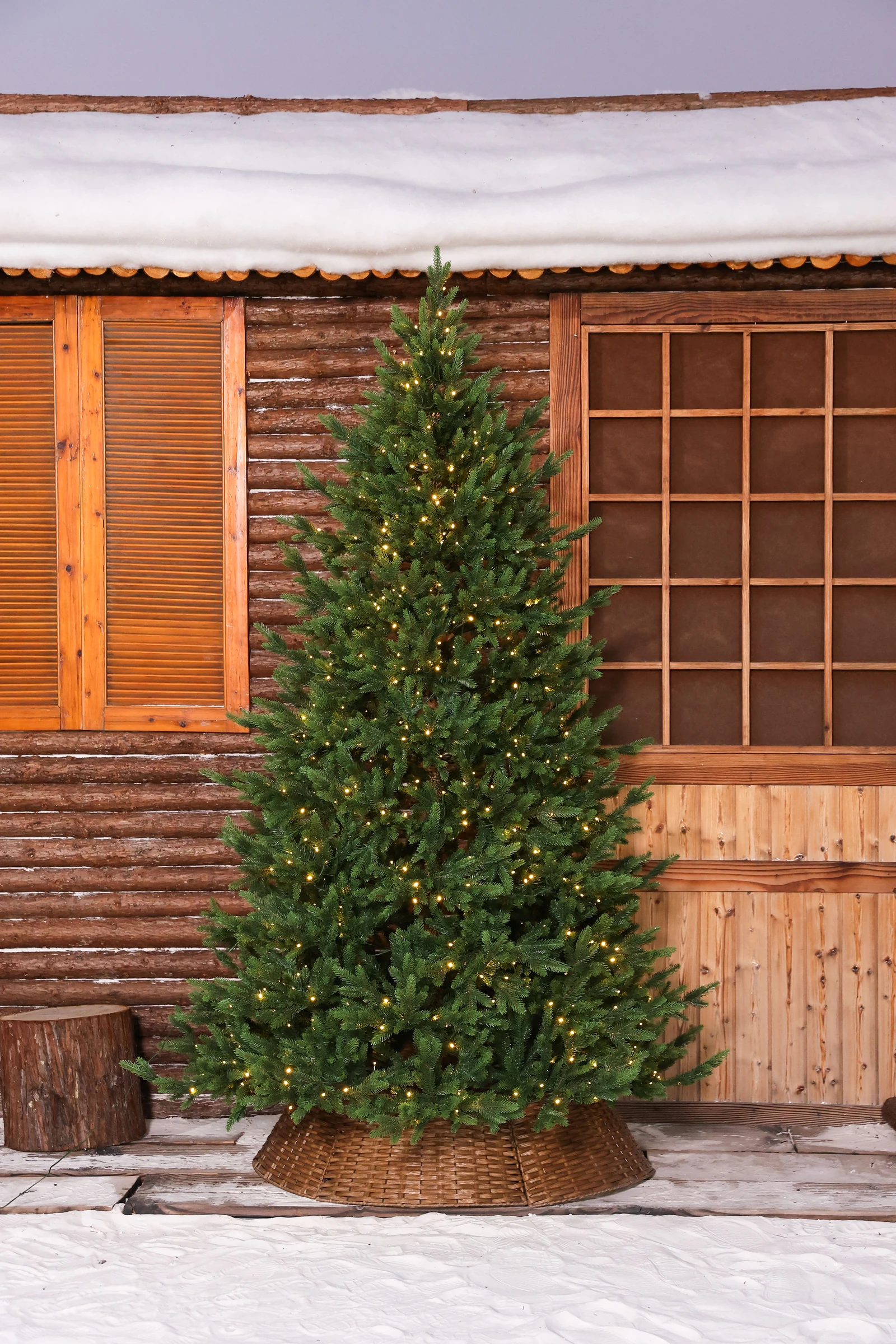
Illuminated artificial Christmas tree displayed with a woven base coverLighting view
Tree sections, folding stand, power accessories and instructions laid out for reviewParts layout
Artificial tree sections with bagged stand and paperwork arranged inside an open cartonCarton layout

Agree Sample Fees Before Work Begins

Tree sample fees commonly follow one of these arrangements. The sample quotation defines which applies and what work is included.

Single-price sample fee

The sample fee equals the relevant product unit price. This fee is not returned after a bulk order. Before proceeding, agree the sample quantity, configuration and work covered by that quotation. A change to the tree, lights or packaging may require a revised price and schedule; revision costs should be discussed before the work starts.

Triple-price sample fee

The sample fee is charged at three times the relevant product unit price. After a bulk order is placed, the fee is returned according to the terms agreed for that project. Record the qualifying order and return conditions in the sample quotation. This arrangement does not automatically include every revision, new component or additional test; those items need an agreed scope.

Sample delivery costs are commonly covered by Jingcan, with the destination and shipping arrangement confirmed for the project. This is not a universal free-shipping offer.

Turn Sample Feedback into a Clear Approval

Once the sample has been reviewed, keep the changes and the accepted version connected. This makes the handover to production clearer.

01

Describe the difference

Identify the part you want to change and describe the desired result. Compare it with the agreed reference under similar viewing conditions. Keep delivery damage separate from a design change so the next action addresses the right issue.

Input
Marked photos and the current sample reference.
Output
A specific feedback list for discussion.
02

Agree the revision

Discuss the proposed changes with Jingcan before remaking the sample. A different foliage layout, light system or carton can affect the cost and timing. State which details remain unchanged, and use the revised specification as the basis for the next review.

Input
Feedback list and the intended changes.
Output
Agreed revision scope, costs and timing.
03

Approve one version

Link written acceptance to the final sample reference, dated photos and the agreed specification. Include the matching lights, accessories and packaging where applicable. Any remaining test or production approval stays visible as a separate requirement before the relevant work proceeds.

Input
Reviewed sample and final specification.
Output
A defined approval basis for the order.

Sampling: Frequently Asked Questions

Can we start with only a reference photograph?

Yes. Send the reference, an approximate size, the intended market and expected order quantity. Explain what you want the sample to help you decide. Jingcan can discuss the missing details with you before the sample scope and quotation are agreed.

How long will sampling and delivery take?

The schedule depends on the sample scope, material availability, changes and any agreed testing. Sample completion and international delivery are separate stages. Share your required review date so Jingcan can discuss a practical plan for the product and destination.

Must every order go through a new prototype?

No. An established style or repeat order may follow a shorter review route, depending on the changes and available approval records. For bulk tree orders, simple-process styles usually start at 100 units and complex styles at 500; mixed configurations and the applicable minimum are reviewed for the project.

Are special tests included with every sample?

No. Tell Jingcan which market requirements or specific performance questions apply to the product. The test object, method, documentation, cost and timing need an agreed scope. A sample for appearance review and a sample intended for specialist testing serve different purposes.

Let’s Plan Your Christmas Tree Sample

Share your reference style, approximate dimensions, target market and expected bulk quantity. Tell us the main question you want the sample to answer and your preferred review date. You can begin with the details you already have. Jingcan will discuss the relevant configuration, sample scope and quotation with you before work proceeds.

Discuss Your Sample

Send reference files by the email or WhatsApp listed on our Contact page.

Scroll to Top