Jingcan · Mixed foliage development
PE and PVC Mixed-Foliage Christmas Trees
Specify a realistic tree around branch placement, a defined silhouette and a reviewed sample, with configuration choices matched to your market.
- Define the finished tree through its silhouette, branch shapes, colour and the placement of PE and PVC foliage, rather than a material label alone.
- Compare the actual outer branches and inner foliage on the same sample before agreeing on the appearance and configuration used for quotation.
- Discuss dimensions, lighting, quantity by version, packing requirements and target market as parts of one product brief for bulk sourcing.
- Keep the selected foliage layout connected to the sample, component description and quotation, so proposed changes remain clear before approval.

See How the Two Foliage Types Share One Tree
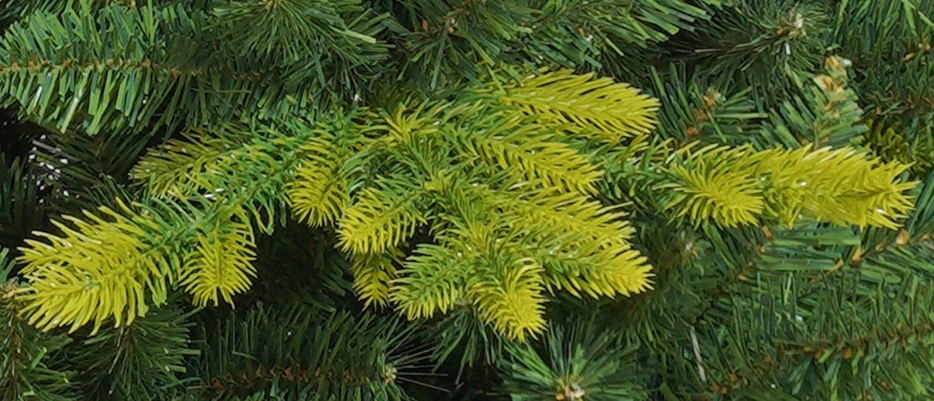
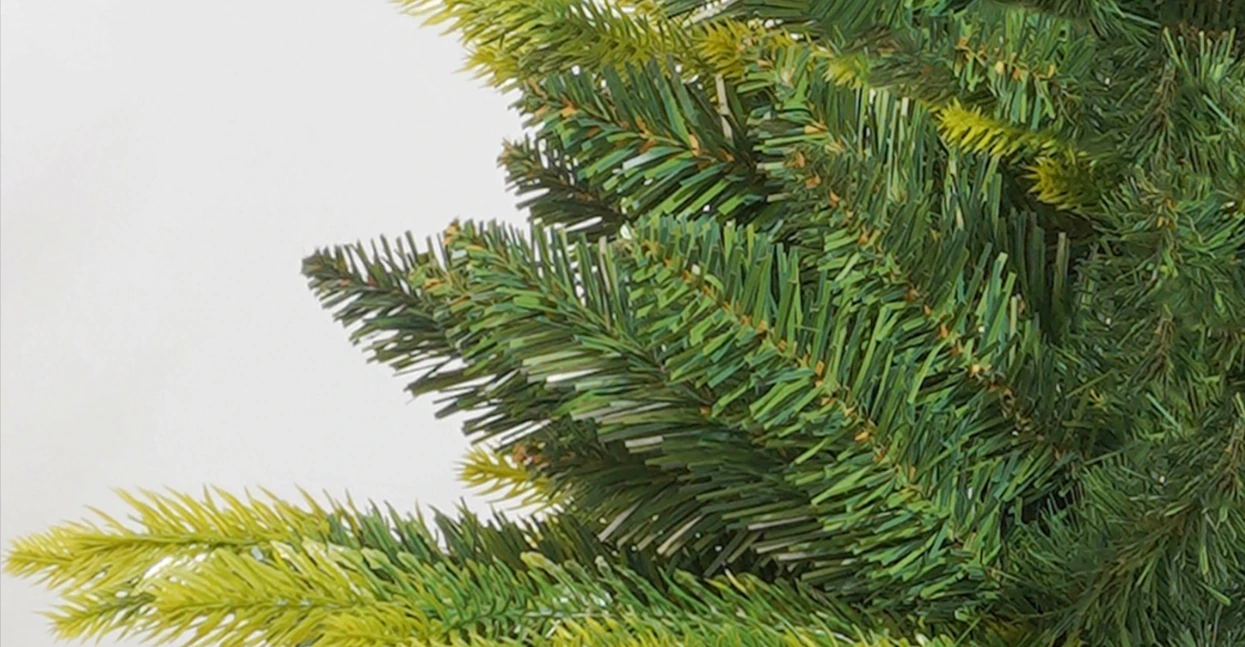
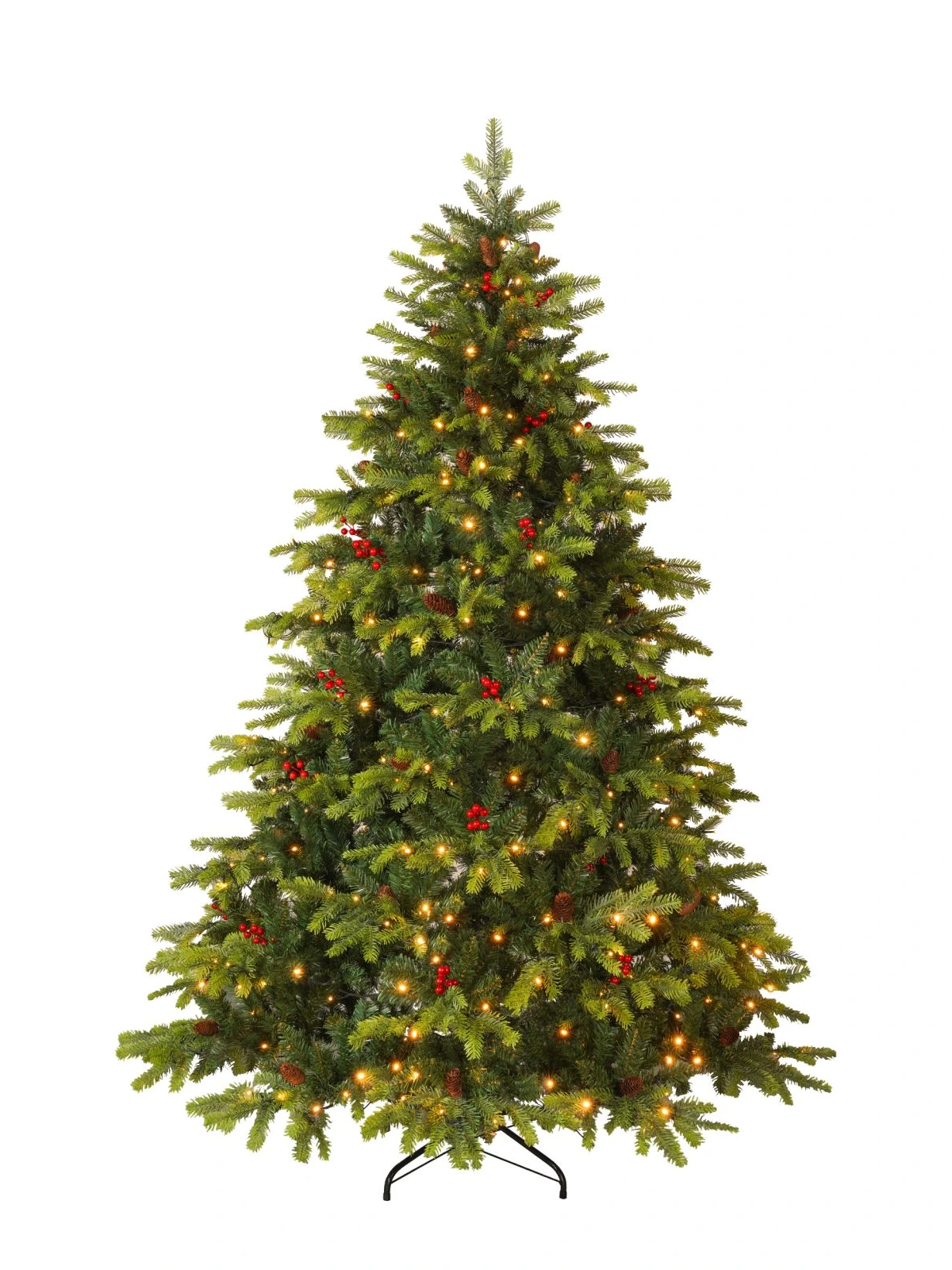
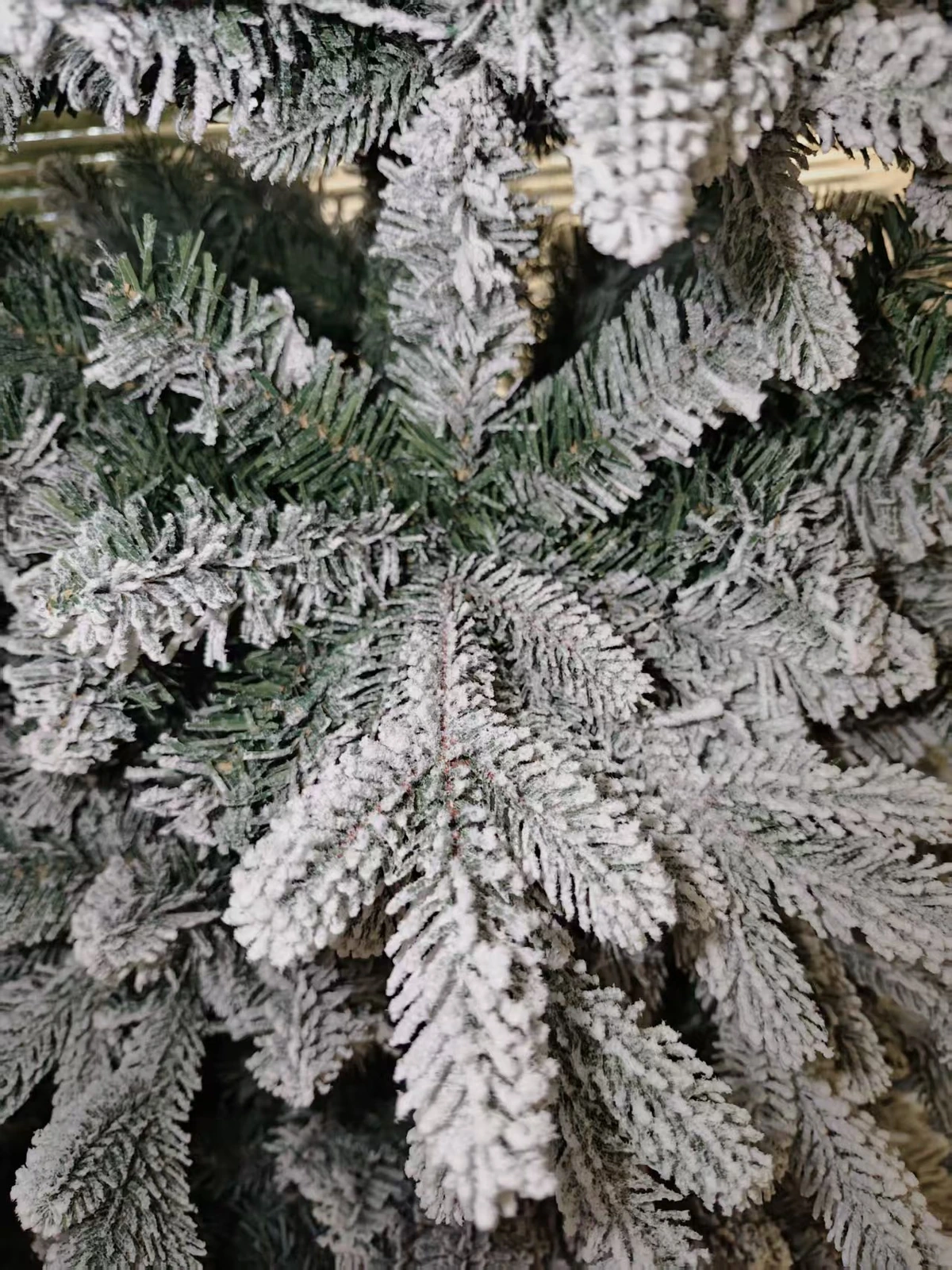
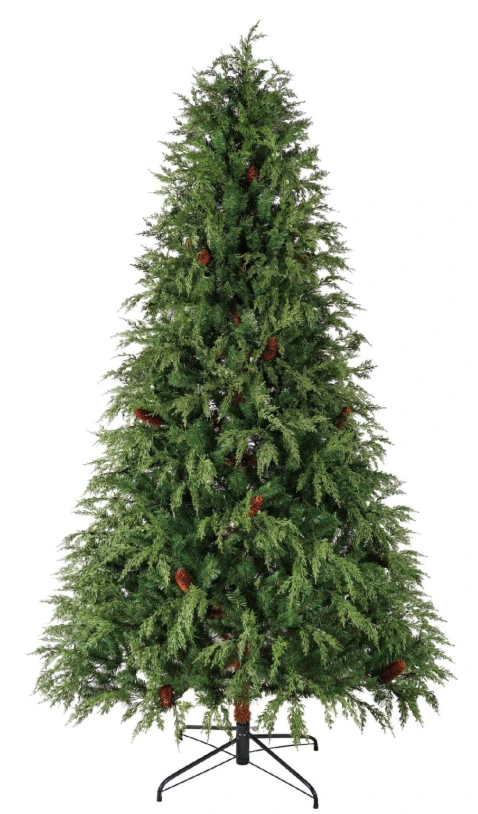
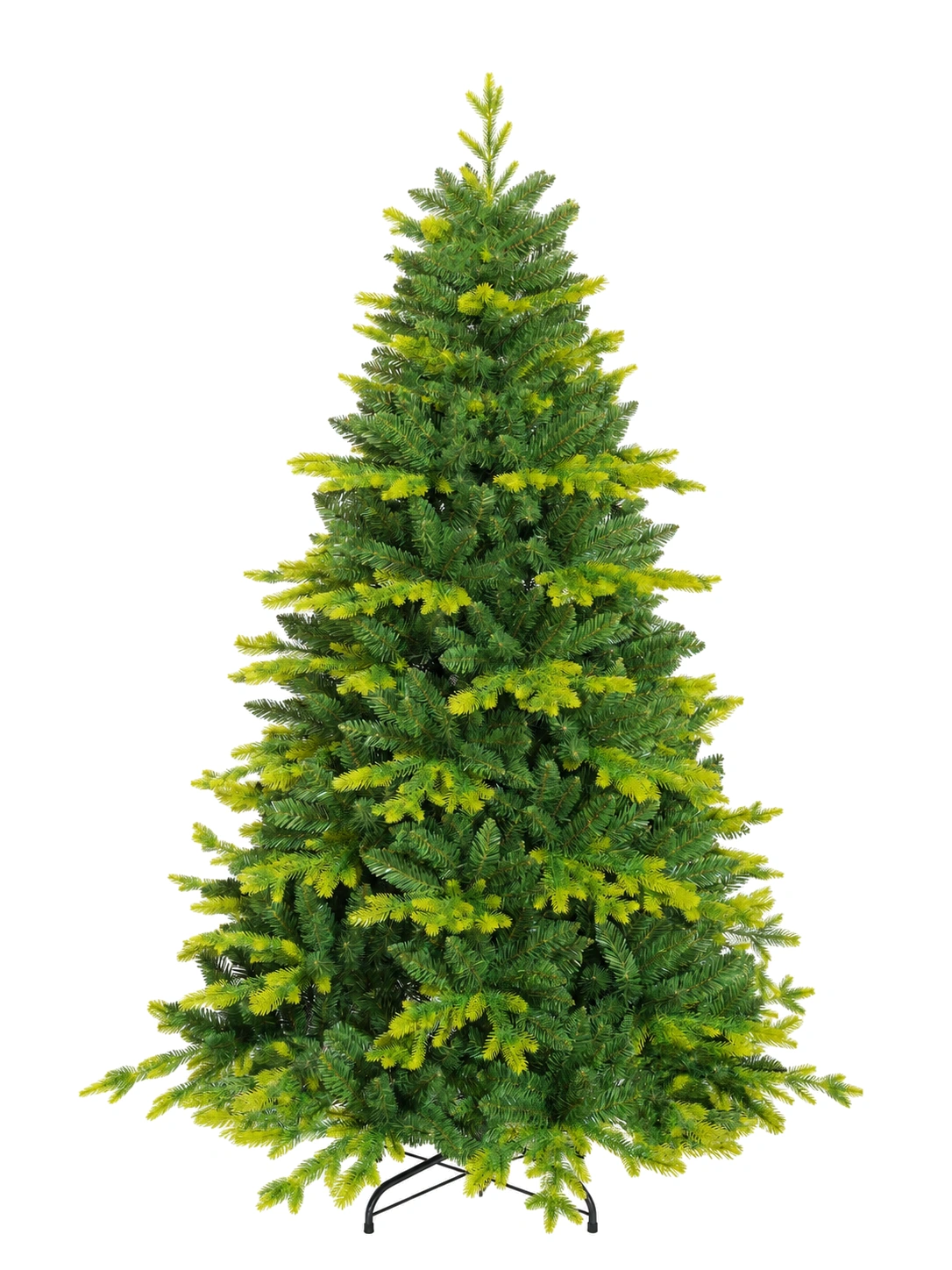
Start with two views of the same confirmed mixed-foliage sample. Outer branch detail and inner foliage placement help explain what the material combination contributes to the complete product appearance.


Inner Foliage Reference
Choose a Foliage Layout Around Your Main Buying Priority
These are three ways to frame a configuration discussion, not fixed product tiers. Select a priority, then compare actual samples and specifications before agreeing on the layout and quotation.
Visible branch detail
Begin with the visual features that make the proposed tree suitable for your collection. Identify the leaf shape, branching direction, colour and outline you want customers to notice, then discuss where those features need to appear. Placing a selected PE branch at a visible position is a configuration decision, not a guarantee that a higher overall percentage will produce the best result.
Compare the full tree and close views of the same sample. Look at the branch layers after shaping, including the top and lower sections, rather than approving only an attractive front branch. Keep dimensions and lighting consistent when evaluating alternatives. The next decision is which appearance requirements are essential and which can be adjusted before requesting a quotation.
Viewing distance
Judge the tree from the distance relevant to the intended display, then inspect branches closely. A near photograph and a room view answer different appearance questions.
Branch position
Identify the locations where the selected branch shape matters most. Avoid assuming the same piece is used at every level unless the actual configuration confirms it.
Sample choice
Choose a reference sample and record the features being approved. The photograph, material description and quotation should refer to the same configuration before an order is discussed.
Appearance and fullness
Consider the relationship between visible branch detail and the foliage supporting the tree shape. A mixed layout may combine selected outer pieces with inner filling, but the exact arrangement needs to be checked on the product. Neither material name alone defines the finished density, natural appearance or cost.
Review colour compatibility, the amount of inner foliage visible and the shape after the branches are opened. If an alternative is proposed, compare it against the same height, width and appearance target. A change in branch quantity or position can affect the result even when both versions are described as PE and PVC. The practical decision is whether the complete layout meets your agreed visual and commercial priorities, not whether it fits an assumed standard mixture.
Colour relationship
Check the PE pieces and PVC foliage together in consistent lighting. Different greens may be intentional, but the desired relationship should be recorded for the selected sample.
Shaping condition
Review the tree after normal shaping rather than comparing one opened sample with another still compressed. Branch position and visible gaps can change the impression of fullness.
Comparable versions
Keep the same measurement and counting rules when reviewing alternatives. Note any changes to width, branch placement or included components before attributing a difference to material selection.
Define workable trade-offs
Share a target cost direction together with the appearance features that should be retained. Discuss changes to the quantity, placement and type of branch pieces as part of the complete tree rather than requesting an unspecified cheaper material percentage. An alternative is useful only when its visual result and configuration are clear.
Ask which changes affect the visible outline, inner fullness, assembly or packaging, and compare samples using the same target dimensions. Lighting, decorations, order quantity and packing can influence the proposal as well. No universal saving follows from replacing one material name with another. The next decision is which revised configuration merits sample review and quotation, with any remaining compromises identified before approval.
Protect the priorities
Name the features that must remain, such as the outline or a visible branch shape. This allows alternatives to be assessed against the actual product objective.
Review the full quote
Compare the same tree size, lighting, stand, packing and quantity. A lower unit price cannot be attributed to foliage alone when other quoted conditions have changed.
Confirm the alternative
Use the revised sample or agreed configuration to evaluate a proposed change. Do not treat a cost discussion as approval for unspecified branch substitution in a bulk order.
Review Real Mixed-Foliage Samples in the Profile You Need
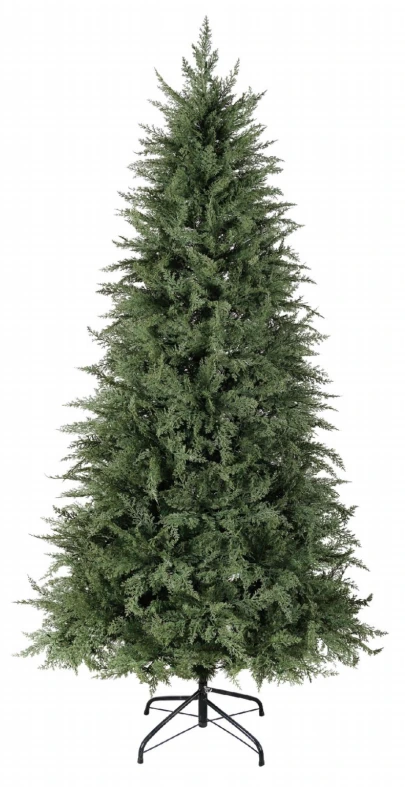
Use these selection directions to match the intended range with real product samples. Confirm the foliage combination, dimensions and included features before treating an image as a catalogue specification.

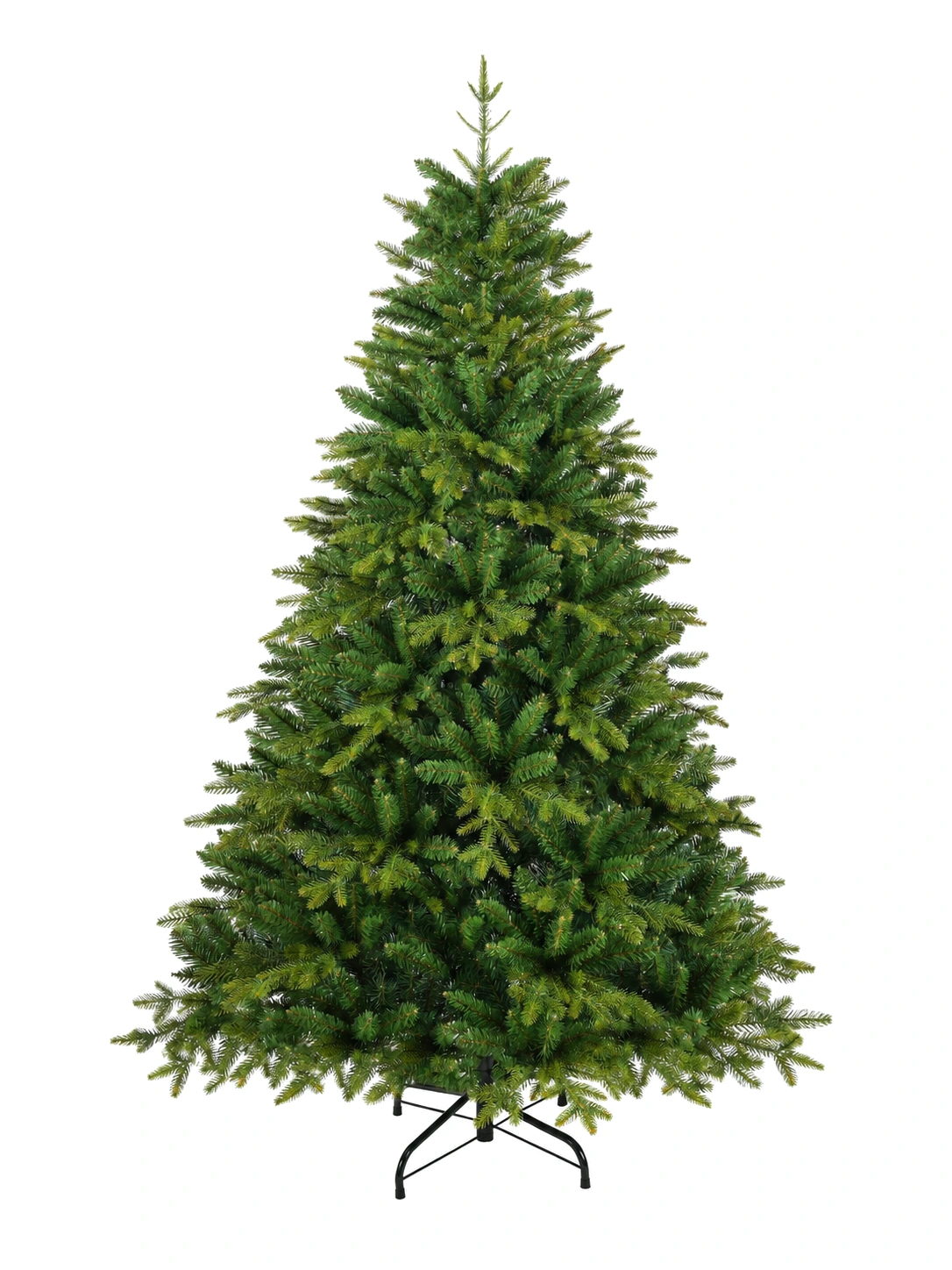
Full Profile Reference

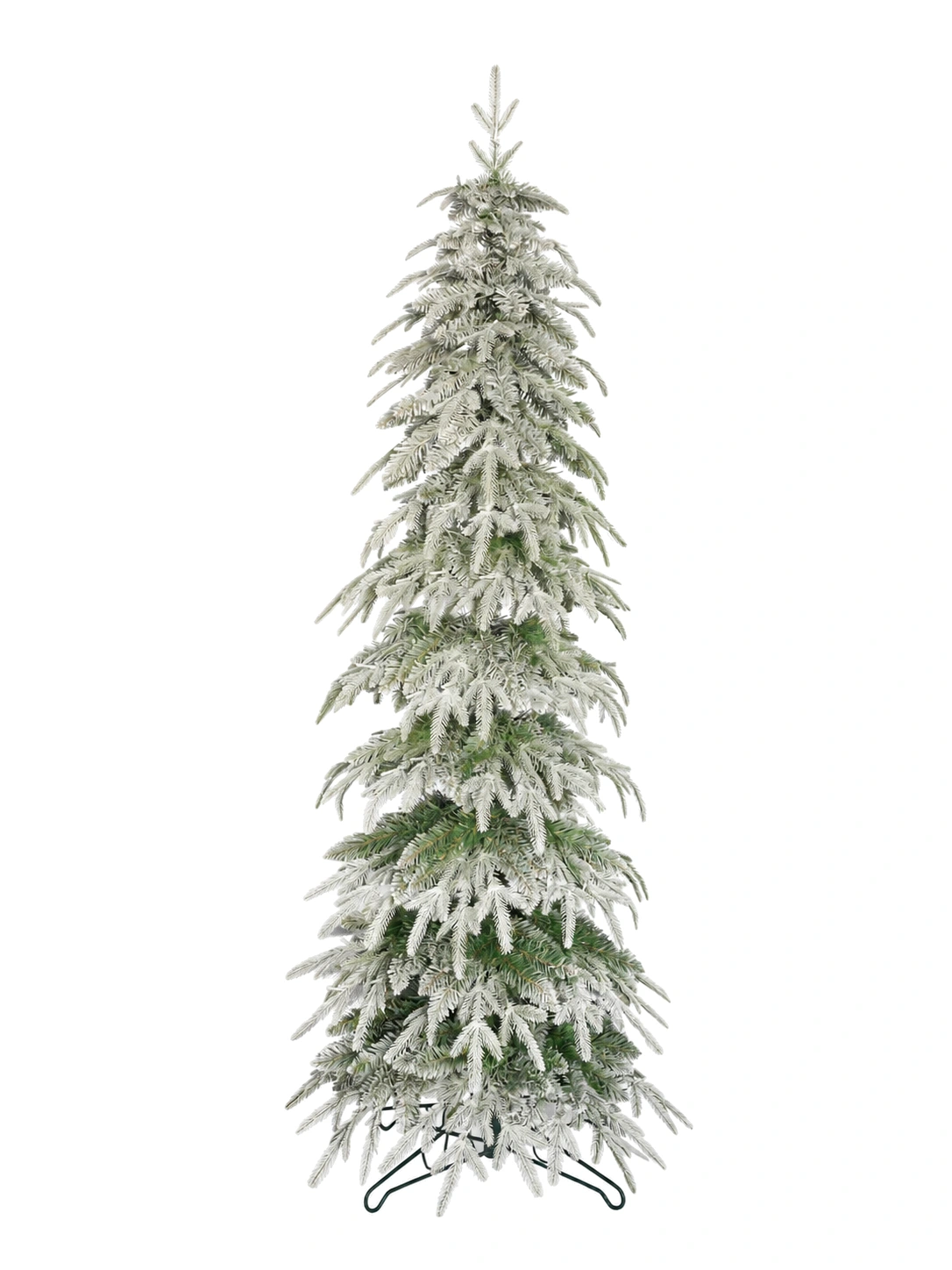
Narrow Profile Reference

Pre-Lit Sample Reference
Define the Layout and Counting Rules Behind Your Sample
Go beyond a material label when defining the product. Review branch positions, sample identity and the meaning of any count or percentage before using those details in a purchasing specification.
Define the Visible Branch Layout Before Approving a Mixed Tree
Separate a material choice from a placement decision: Saying PE and PVC identifies the materials but leaves the arrangement open. A configuration may use selected realistic pieces at visible positions and other foliage within the tree, yet that relationship must be checked on the actual sample. Ask where each leaf form is used, what remains visible after shaping and whether the same layout is intended at different branch levels.
Read the tree as a complete shape: The top, central body and lower layers contribute differently to the outline. Review them together with the target width and branch arrangement instead of approving a single attractive tip. Colour, branching geometry and the relationship between outer detail and inner filling all affect the result. Photographs should identify the sample and the view they show, rather than combining unrelated products into an apparent matched set.
Turn observations into an agreed brief: Record the chosen branch type, colour and location in terms that can be connected to the selected product. State which appearance details are essential, and where alternatives may be discussed. If a change is proposed, review how it affects the whole tree before treating it as an equivalent replacement. This approach defines a configuration for assessment; it does not establish a standard blend, a guaranteed natural look or a universal manufacturing tolerance.

Make Counts and Material Ratios Traceable to the Selected Configuration
Ask what is being counted: A total branch count, a tip count and the number of forks on a PE piece are different descriptions. Two quotations can show a similar number while counting different objects. Before using a figure to compare samples, agree on the counting rule and the product version to which it applies. Do not use an unverified range as a shortcut for judging fullness.
Define the basis of any percentage: A PE share measured by weight is not automatically comparable with one calculated from a defined count. If a percentage is requested, identify the numerator, denominator and included components before using the result in the specification. Where those details are not available, record the selected pieces and their positions and leave the ratio unclaimed. A photograph cannot supply the missing calculation.
Keep appearance and arithmetic together: The material figure is only one part of a product decision. Review the actual shaped tree, dimensions and layout with the same version of the specification. A revised height or branch arrangement may require its own count and material review, even if the intended appearance stays similar. The objective is a shared description of the product being quoted, not a competition for the highest unsupported number. Agree on the information needed for your project before approving any public product claim.

Assess an All-PE Request Against the Actual Foliage Layout
Define what the label includes: An all-PE request needs a clear foliage scope before it can be compared with a mixed tree. Ask whether the requirement applies to every foliage component or only to visible outer pieces. The description should distinguish foliage from the centre pole, branch supports, wiring and stand. An outer branch photograph does not establish the materials used inside the tree or at every level.
Compare like with like: For the proposed all-PE direction and the mixed alternative, keep the target height, base width, shaping condition and viewing angle comparable. Inspect the top, middle and lower branches, then examine the interior. Record the actual leaf forms and positions in both versions. A different outline or branch quantity can change the impression of fullness, so do not attribute every visible difference to the PE label or assume a universal cost saving.
Resolve the claim before selecting the version: Request a configuration record that identifies the foliage components and the scope of the material description. If the interior material or a component is unknown, retain it as an unresolved item rather than publishing an all-PE claim. Choose the configuration that meets the appearance objective and quoted requirements after that review. This is a way to assess a buyer request, not evidence that Jingcan has a verified all-PE model ready for purchase. Actual availability and the proposed construction remain subject to the selected sample and project assessment.


Build One Specification That Connects Appearance With the Quotation
Use this product-specific checklist to connect the selected foliage layout with dimensions, components and purchasing conditions. Mark undecided fields clearly rather than filling gaps with estimates or assumed catalogue values.
| Field | Information to provide | What to confirm |
|---|---|---|
| Product reference | A sample, authorised images or a model reference. | Identify the version and the visual features to retain. |
| Shape and dimensions | Target height, width, silhouette and stand requirements. | Agree on measurement and shaping conditions. |
| Foliage components | Selected PE shapes, PVC leaf form and colours. | Confirm the actual pieces and their positions on the sample. |
| Structure and assembly | Centre pole sections, branch attachment and stand requirements. | Record the selected construction; a material label does not define assembly. |
| Count and ratio | Any required tip count or material-share description. | State the counting or calculation basis; leave unsupported values open. |
| Lighting and decoration | Unlit or pre-lit, light requirements, surface finish and decorations. | List included and optional items separately; match components to the destination market. |
| Quantity and packing | Units by size or configuration, branding and delivery route. | Review MOQ, packing proposal and quote conditions for the order. |
| Approval scope | Required sample observations and any proposed changes. | Identify what is accepted and what still needs discussion. |
Move From a Branch Preference to a Defined Product
Use these three decisions to organise sample discussion and quotation. The exact development route depends on the starting reference, requested changes and the information available for the particular project.
01
Select the Reference
Begin with the full-tree direction and the branch appearance that matter to your range. Identify target dimensions and separate fixed requirements from preferences. If the material layout is not yet known, describe the visual objective instead of inventing a percentage. The purpose is a useful assessment brief rather than a complete technical claim.
Input: A product reference, target dimensions, intended market, estimated quantity and the appearance priorities for discussion.
Output: A shared starting brief with the sample direction and the unresolved configuration questions identified.
02
Review the Combination
Compare the selected branch components, their positions and the shaped tree together. Clarify counting terms before using numbers to judge the proposal. Discuss lighting, stand and packing where they affect the product under review. Record requested changes so a decision about one attractive branch is not mistaken for approval of the complete mixed-foliage tree.
Input: The reference brief, actual sample identity, branch views and any proposed component or layout changes.
Output: A defined combination showing the accepted appearance, required revisions and remaining specification decisions.
03
Confirm the Version
Before moving forward, connect the agreed sample and configuration to the quantity breakdown and commercial proposal. Check that revisions to foliage or dimensions are reflected in the information being reviewed. Sample arrangements, timing and order conditions need project-specific confirmation. This is a buyer planning sequence, not a claim that every project uses identical internal documents.
Input: The reviewed configuration, quantity by version, packing requirements and the applicable quotation or proposal.
Output: An agreed product scope with unresolved commercial or technical conditions clearly identified before commitment.
Mixed-Foliage Christmas Trees: Frequently Asked Questions
These answers clarify sourcing, configuration, counting and buying conditions for a mixed-foliage project. Use them to prepare your brief, then confirm the selected product and any project-specific requirements.
How do we define an all-PE foliage request?
If your customer wants PE on the inside as well as the outside, write “PE foliage throughout, including the branches near the centre pole” on the sample brief. When you check the sample, lift an outer branch and look underneath. If PE is only needed where shoppers see and touch the tree, tell us that up front so we can quote that version.
What does PE and PVC mixed foliage actually describe?
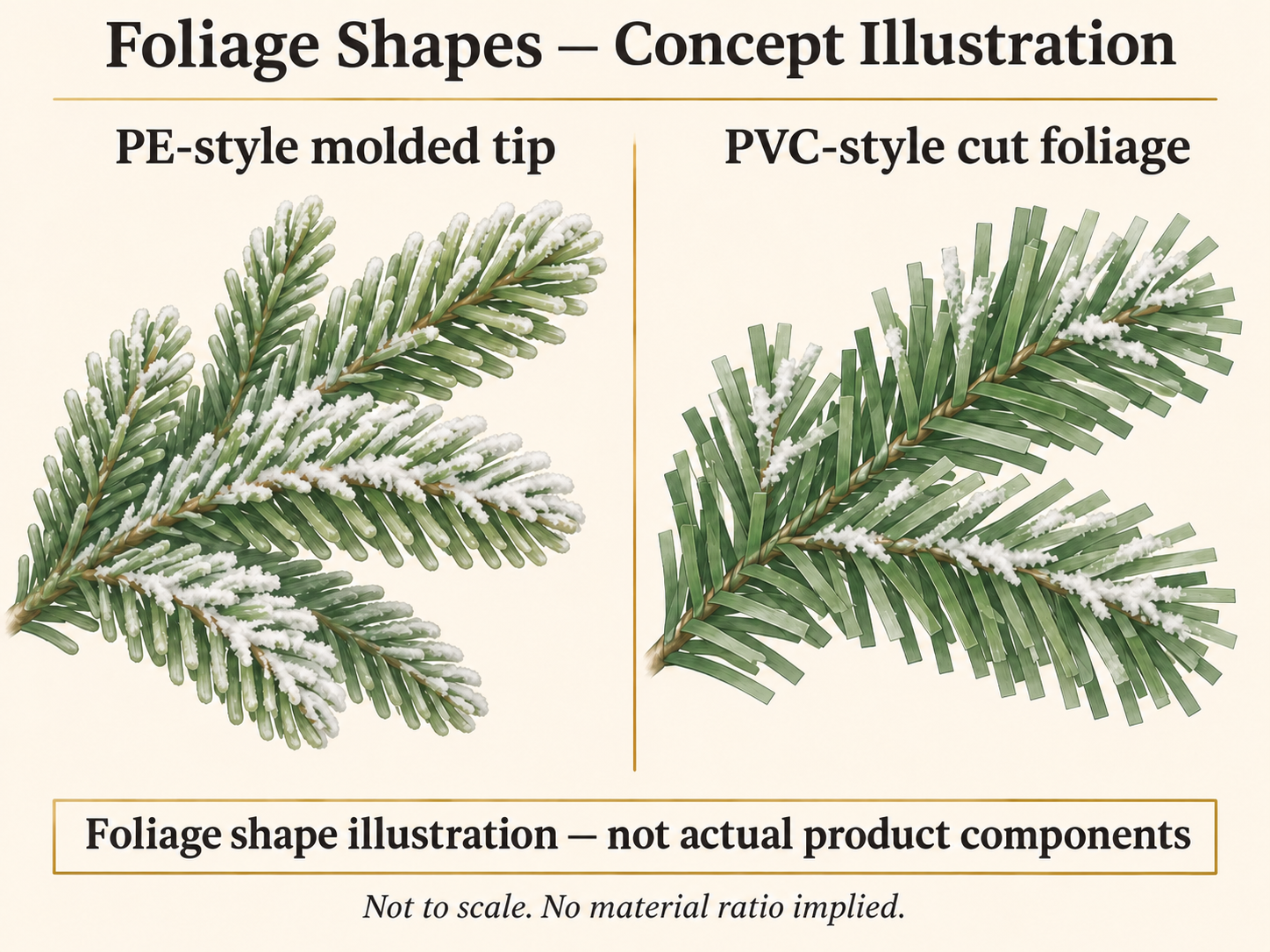
It means the tree uses both types of foliage. One common layout puts molded PE tips on the outside, where you see the needle shape, and PVC closer to the trunk to fill out the tree. The mix can vary. For a sample you like, ask to see one branch from the tip back towards the trunk so you can see where each material starts.
Is a higher PE percentage always the better choice?
Not always. If two trees have caught your eye, look first at the parts your customers will notice. For a tree displayed beside a shop entrance, that may be the outer tips people see and touch. For a window display, step back and compare the silhouette and the gaps between layers. A higher PE figure alone won’t tell you which tree looks better in that setting.
How should a PE percentage be specified?
Write down what the percentage is a share of. For example, “50% of the total foliage weight is PE” and “50% of the counted tips are PE” mean different things. If you are comparing two quotes, ask both suppliers to use the same basis and say which foliage they included. If what you want to match is a photo, you can send it without guessing a percentage.
Can we change the outer branch shape or inner filling?
Yes, we can look at either change. If you like the outer tips but can see too much of the centre pole, circle that gap on a front photo. That tells us to look at the inner filling and keep the outer shape you chose. If it’s the outer tip itself you want to change, a close-up of the needle shape you like is the most useful reference.
Can a mixed-foliage tree be pre-lit or flocked?
Yes. Start with the tree shape you like. For a pre-lit version, tell us the light colour and the country where it will be sold. For flocking, show us where you want the snow to sit and whether you prefer a light dusting or thicker coverage. A close-up helps us match the texture, and a full-tree photo shows how much green you want to leave visible.
Are PE forks and tip counts the same measurement?
No. A fork is a split you can see on a molded PE piece. A tip count is the total reported for a tree, and you need to know what was counted as one tip. If two quotes show different totals, ask each supplier to circle one counted tip on a branch photo. That way you can see whether the numbers mean the same thing.
What is the minimum order quantity?
Simple designs usually start at 100 trees and more complex designs at 500. If you want 100 trees split between two heights, tell us how many you need in each height and whether the foliage and lights are the same. We can then check whether that split works for the tree you’ve chosen.
Can we request several heights with a consistent appearance?
Yes. Pick the size that best shows the look you want for the range. Tell us what to carry across, such as the same outer needle shape, the same open layers or a similarly slim outline. Give us the space available for each size, too. Side-by-side front photos of the shaped samples make it easier to spot a taller version that looks too wide or too sparse.
What should we send for sampling and quotation?
A photo with a few notes is a good start. Circle the features you want to keep and give us the height, maximum base width, quantity per size, destination and target delivery date. If lights, snow finish or retail packing matter to your price, include those details too. You can leave the PE percentage or tip count open while we work through the sample with you.
Discuss Your PE and PVC Tree Configuration With Jingcan
Start with the tree you want your customer to see. Send a full-tree reference together with any close views that explain the branch shape, colour or layout you prefer. Tell us which features are essential to your collection and which choices remain open. If you already have a sample or an existing model, identify the version so the discussion stays connected to one product.
Include the target height and width, intended market and expected quantities for each configuration. Describe the desired relationship between outer PE pieces and inner PVC foliage where it is known. If it is not known, explain the appearance objective rather than guessing a percentage. Any material-share or tip-count requirement should include its calculation or counting basis before it becomes part of a quoted specification.
List lighting, finish, decoration, stand, branding and packing requirements separately. These choices can affect the complete proposal and should not be hidden inside a general request for a realistic tree. Share the preferred delivery window and any channel constraints relevant to the packed product.
Use Jingcan’s existing Contact page to begin the conversation. You do not need to resolve every detail before enquiring; mark uncertain fields and identify the decisions you need help assessing. Feasibility, sample arrangements, quotation, order quantities and timing are confirmed for the particular project, using the selected configuration rather than assumptions drawn from a photograph.